
Weasel words are the ‘art of ambiguity’, they’re words that suck the meaning out of a statement, similar to how a weasel sucks the contents from an egg, say ROSS FITZGERALD and DICK WHITAKER.
According to artificial intelligence (AI) weasel words are “intentionally ambiguous, vague phrases used in advertising, politics and writing to create an illusion of substance while avoiding concrete, defensible claims.”
They are part of the broader cohort of an endeavour described, again by AI, as “the art of ambiguity”, that employs “vague modifiers, unverified authorities, or generalisations that cannot be proven or disproven”.
Examples include such phrases as “some say”, “many experts agree”, and “studies suggest” that are intended to create the illusion of authenticity without any real substance.
Weasel words are not new. The term “weasel words” was first used in 1900 by the American author Stewart Chaplin who described them as “words that suck the meaning out of a statement, similar to how a weasel sucks the contents from an egg”.
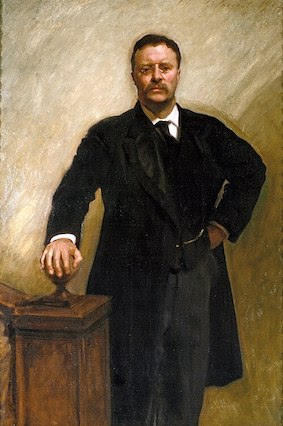
Theodore Roosevelt, Republican US President (1901-1909), took the concept further. In a 1916 public speech he made in St Louis, titled America for Americans, he said: “One of our defects as a nation is a tendency to use what have been called weasel words. When a weasel sucks eggs it sucks the meat out of the egg and leaves it an empty shell.
“They are part of intentionally ambiguous, deceptive, or evasive language used by politicians to avoid responsibility”.
Whereas Roosevelt used the term in connection with politics and politicians, weasel words have morphed across a much larger arena that includes advertising and marketing, corporate language (corporate speak) and “psychobabble”, a type of communication non-experts use to describe psychological conditions that they know little about.
These days they are not just “words”, but phrases and entire sentences that are all designed to promote the impression of knowledge where there is little or none.
This broader phenomenon can be described by the verb “weaselling” that includes the use of weasel words, grandiose titles, jargon, clichés, and many other forms of insincere communication.
The corporate world in particular, has become a breeding ground for weaselling with many examples found in Wikipedia.
Frequently called “buzzwords”, they include “paradigm shifts”, “synergy”, “rightsizing”, “uptick”, “leveraging our core competencies”, “thinking outside the box”, “drilling down”, “using our bandwidth”, “circling back”, “picking the low-hanging fruit”, “going offline” and the dreadful “moving forward”.
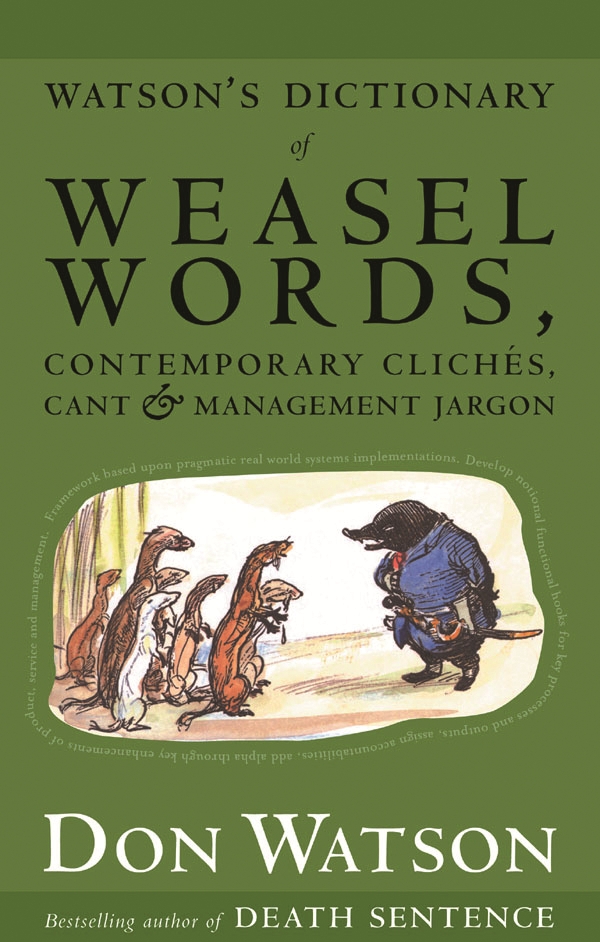
In order to encourage the use in public discourse of meaningful, precise language, Watson’s Dictionary of Weasel Words – Contemporary Cliches, Cant and Management Jargon, published in 2004, highlights the increasing use of corporate and government jargon.
In doing so, Don Watson draws attention to some corporate clangers such as “an involuntary career event” (being fired), “a negative patient outcome” (dying) and the classic “event empowerment tool” (a diary).
Then we have emails that begin with “I hope you are well”, inflated job descriptions such as “environment presentation manager” (cleaner) and “unplanned in-flight manoeuvre” (out-of-control aircraft)
All this has led to a corporate game called Buzzword Bingo (or Bullshit Bingo) where the participants – unknown to management – attend a business meeting bringing along bingo cards on which a selection of buzzwords are printed. As these buzzwords are mentioned during PowerPoint presentations they are ticked off the card and the winner is the first to complete the list.
An online example from the US is this Bingo card together with the “How to Play” instructions:
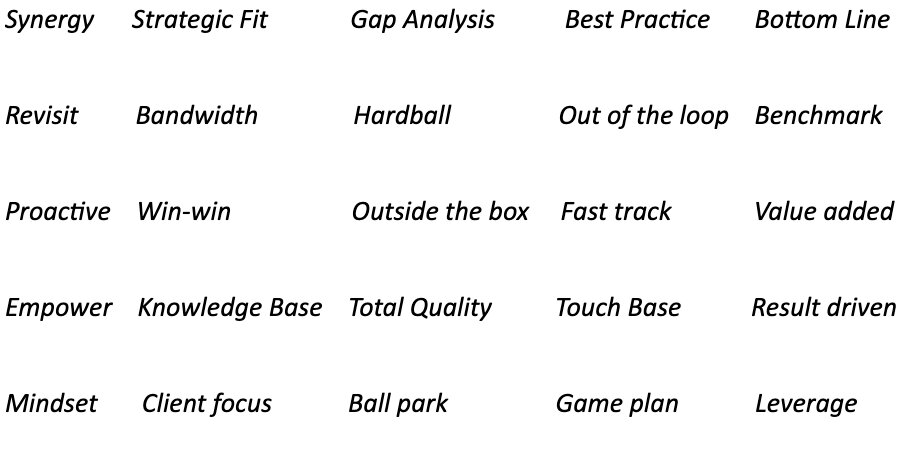 Check off each block when you hear these words during a meeting, seminar or phone call. When you get five blocks horizontally, vertically or diagonally, stand up and shout “Bingo”(or “Bullshit” depending on the environment).
Advertising has long used weaselling to reinforce dubious claims, such as “50% off”, “controls dandruff”, “kills up to 99% of household germs” and “half price”, all attempting to convey a level of precision that does not exist.
Weaselling in politics includes “co-payment” (an extra tax), “evidence suggests”, “it is said” and “the polls show”. AI summarises this type of weaselling as “words or phases that are deliberately ambiguous, vague or misleading, used to create an impression of substance while allowing politicians to avoid accountability, hedge bets, or break promises”.
Another subclass of weaselling is “psychobabble” – namely the ruse of psychological jargon, buzzwords and therapeutic language in everyday conversation.
Four common examples highlighted by AI are “high-energy experience”, “getting in touch with yourself”, “go with the feeling” and “re-parenting your inner child”. Examples identified by Watson are: “At the end of the day”, “game plan”, “no brainer”, “key deliverables” and “leveraged”.
As he says, “I’d like your buy-in on this” really means “I want someone else to blame when this thing bombs”.
Sadly, our experience of PowerPoint presentations coincides with Watson’s: “Bullet points and slides have an appearance of truth that is largely illusory.”
Apart from the amusement that uncovering weaselling provides by highlighting jargon, clichés and corporate speak that destroy meaningful language and obscure truth, we could do well to follow his advice: “When the words are suspicious, go after them, insist they tell us what they mean. Go after the meaning of the words.”
Ross Fitzgerald AM is Emeritus Professor of History and Politics at Griffith University. His most recent book is Chalk and Cheese: A Fabrication, coauthored with Ian McFadyen and published by Hybrid in Melbourne.
Dick Whitaker is a widely published author and lecturer in the fields of meteorology and Australian history.
News all day, every day at CityNewsQBN.com.au.





Leave a Reply