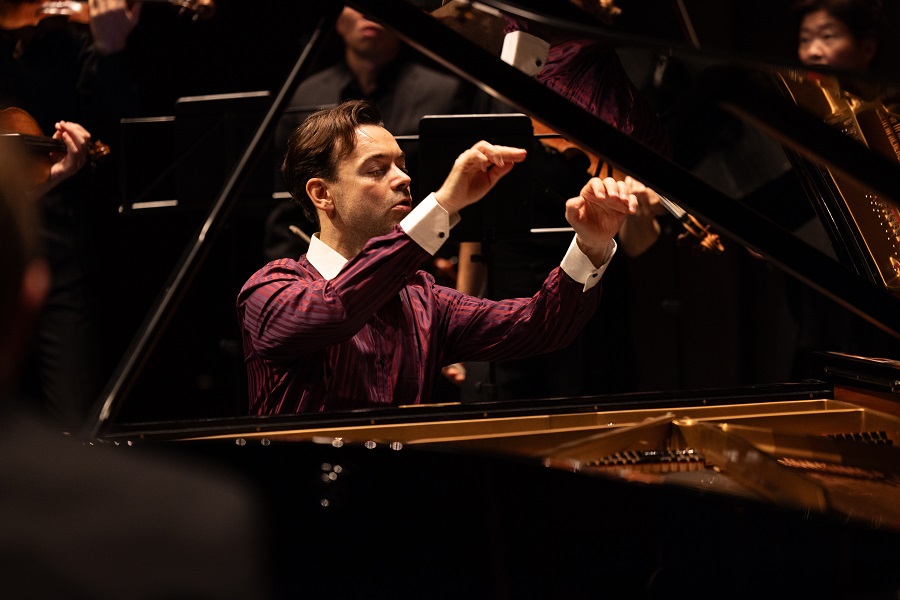
Music / Australian Chamber Orchestra, Rachmaninoff’s Rhapsody. At Llewellyn Hall, February 18. Reviewed by THAYER PREECE.
Every concert needs a piece of music that will draw an audience in, one so beloved that even the most adventure-adverse concertgoer will sit through any number of new or obscure works in order to hear it performed.
On Wednesday night, that piece was Rachmaninoff’s iconic Rhapsody on a Theme of Paganini, one of the most famous works in all of classical music, performed impeccably by the Australian Chamber Orchestra and piano soloist Dejan Lazić.
The program for Rachmaninoff’s Rhapsody was quite a daring one. In contrast to many classical concerts featuring music composed centuries ago, the Rhapsody, composed in 1934, was the oldest composition in the concert. It was joined by Igor Stravinsky’s Concerto in D “Basle”, De Profundis by living Lithuanian composer Raminta Šerkšnytė, and a new commission by acclaimed American composer John Luther Adams.
John Luther Adams (not to be confused with fellow composer John Adams), is one of the world’s best known living composers. Adams’ compositions are highly informed by his passion for environmental issues and love of the natural world. Horizon, written for the Australian Chamber Orchestra after Adams’ immigration to this country, draws inspiration from Australian landscapes and the horizons beyond them. Adams wrote the piece as he was travelling across the country, journeying from the tropical north, across the red centre, and down to the shores of the Tasman Sea.
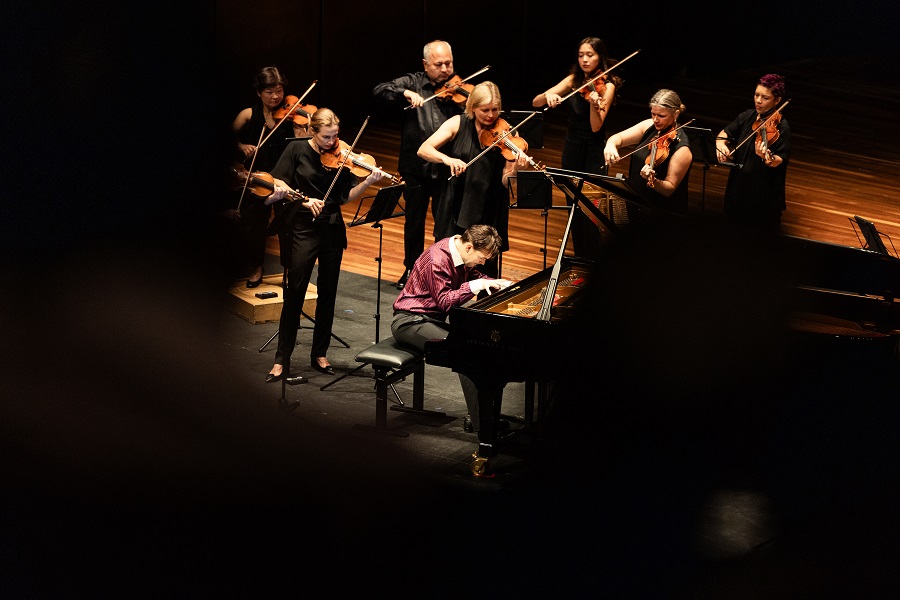
Horizon displays the style for which Adams has become famous, creating immersive washes of sound. The music emerged and concluded with a deep note from the double bass, evoking the hum of the Earth itself. The various string instruments were integrated in concentric arcs across the stage, and as each musician joined, they created new textures and rhythms, blending into a sound that was both constantly changing, yet almost static as a whole. The effect was mesmerising, and clearly had a profound effect on the appreciative audience.
Sandwiched between two pieces of unrivalled impact and emotion, the Stravinsky and Šerkšnytė struggled a bit to stand out, though they might have been showstoppers if paired with less striking works. Both compositions showcased the ACO’s impressive ability to play in perfect unison, with driving rhythms providing the momentum for both pieces. The Stravinsky sparkled with hints of jazz influences (and some great viola solos), while the Šerkšnytė evoked images of bleak Eastern European forests and strikes reminiscent of stabbing knives from the violins.
Rachmaninoff is one of the most beloved composers of the 20th century, and his Rhapsody on a Theme of Paganini is perhaps his best-known work. Rachmaninoff’s genius is obvious in the composition, as he takes one of the most famous violin melodies, Paganini’s 24th Caprice, and transforms it into an iconic work for piano, including one of the most famous romantic themes in the history of music.
Many members of the audience probably came to this concert specifically to hear this work, and they would not have been disappointed. Dejan Lazić displayed incredible virtuosity in the piece, ranging from cheeky staccato sections to the raw passion of the piece’s more dramatic variations. The chamber reduction of the orchestral score was effective, and served to highlight the soloist’s virtuosity.
Rachmaninoff’s Rhapsody was a program that celebrated music from across the most recent century, and it surely created new fans of living classical composers while also satisfying the audience with a rousing rendition of an old favourite.
News all day, every day at CityNewsQBN.com.au.


Leave a Reply