By Poppy Johnston
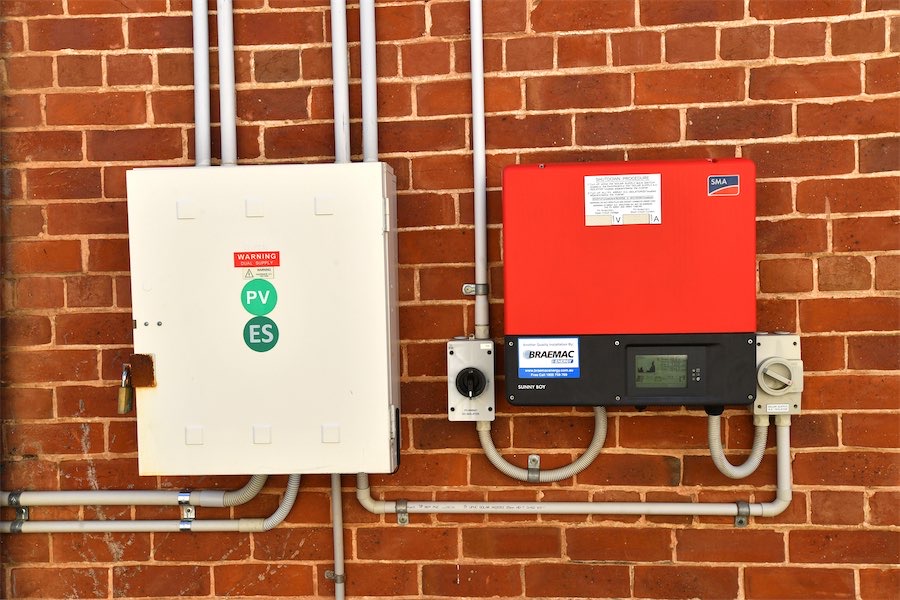
More batteries in more homes is the promise of a federal government decision to triple the budget of a popular rebate scheme and wind back discounts for bigger systems.
The subsidy, which has been in place for five months, will get a generous top-up to $7.2 billion across four years after initially being earmarked to cost $2.3 billion.
Discounts will also be staggered according to system size from May 2026.
The fund was thought to be running out rapidly, in part because households were installing systems up to the maximum subsidised size to take full advantage of the one-time offer.
Energy and Climate Change Minister Chris Bowen said the $2.3 billion had not yet run out but was “clearly” on track to be spent within the next 12 months.
“Hence the need to make sure the program is sustainable,” he told reporters in Western Sydney on Saturday.
Mr Bowen rejected suggestions the scheme had been poorly designed, arguing the problems stemmed from its popularity and strength.
“If no one had taken this up, you’d be rightly asking me questions,” he said.
More than 155,000 households and small businesses have installed a battery since the scheme was introduced five months ago, with some 1000 systems going in every working day.
Smart Energy Council chief executive John Grimes said the program has been a “smash hit”.
“And today it gets bigger – $7.2 billion in funding – and better,” he told reporters on Saturday.
Nepean Solar chief executive Jim Hill described the changes as a “huge relief”.
“A boom-and-bust cycle has been a hugely impactful feature of this industry, so this sensible change that ensures the long-term viability of our sector is a huge relief and we welcome it,” the head of the Sydney-based solar and battery installer said.
“As a small business, we need to be able to plan for the ordering of stock, training and upskilling staff, and indeed the taking on of new apprentices.
“This approach allows us to do this with confidence.”
Under the scheme, eligible households and small businesses have been able to secure a 30 per cent discount on a home battery when installed alongside new or existing rooftop solar.
Subsidies were available on batteries with capacities of between 5kWh and 100kWh, with the rebate applied to the first 50kWh.
Under the changes, the first 50kWh of a system would still be eligible for support, but discounting would not be as generous per kWh for medium- and larger-sized batteries.
Households that add a home battery can expect $600-$900 per year in savings on energy costs on top of the bill benefits from solar, based on Australian Energy Market Commission figures.
The Labor government has been under pressure to ease electricity costs and has recently opted not to extend its energy bill rebates into 2026.
REBATE ADJUSTMENTS FROM MAY 2026
-
Small battery (up to 14kWh): eligible for full support rate for each kWh
-
Medium battery (14kWh to 28kWh): eligible for 60 per cent of support rate for capacity over 14 kWhs
-
Large battery (28kWh to 50kWh): eligible for 15 per cent for capacity over 28kWhs
News all day, every day at CityNewsQBN.com.au.



Leave a Reply