Visual arts / The 5th National Indigenous Art Triennial: After the Rain. At the National Gallery of Australia, until April 26 . Reviewed by KERRY-ANNE COUSINS.
There was a frisson of excitement among those of us waiting for the 5th National Indigenous Art Triennial at the National Gallery, initiated at the National Gallery in 2007 with Brenda L Croft as its first artist/curator.
It attracts the participation of First Nations Peoples from across the country and is a touring exhibition.
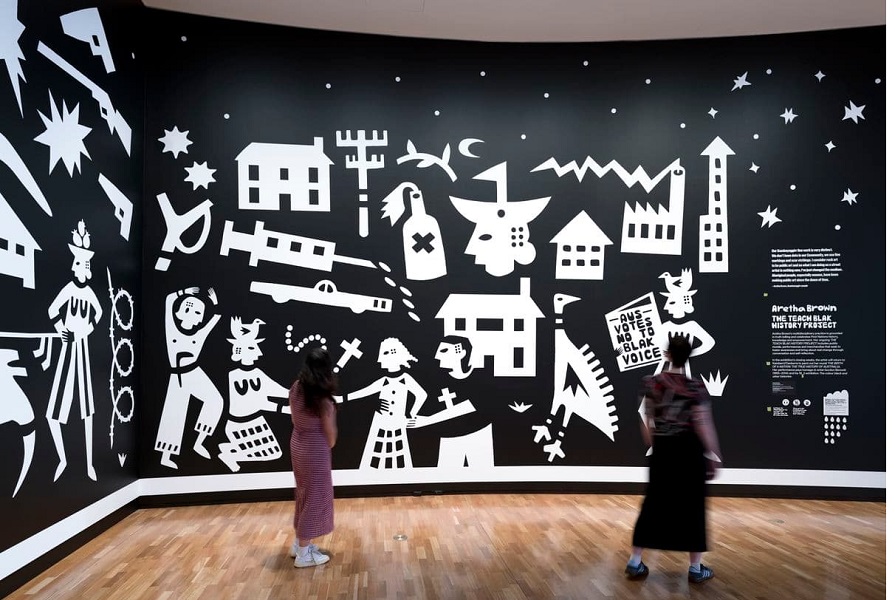
We were joined by many of the indigenous artists including Tony Albert, the celebrated artist who this year was the Triennial’s artistic director. The stage had been set at the entrance to the exhibition by Vincent Namatjira’s iconic portraits of each of the individual artists and by Aretha Brown’s startling black and white mural that is the exhibition’s signature image.
After the Rain is an emotive theme for this year’s exhibition. It signifies hope and renewal This year’s triennial is characterised by 10 individual installations instead of the work of many individual artists.
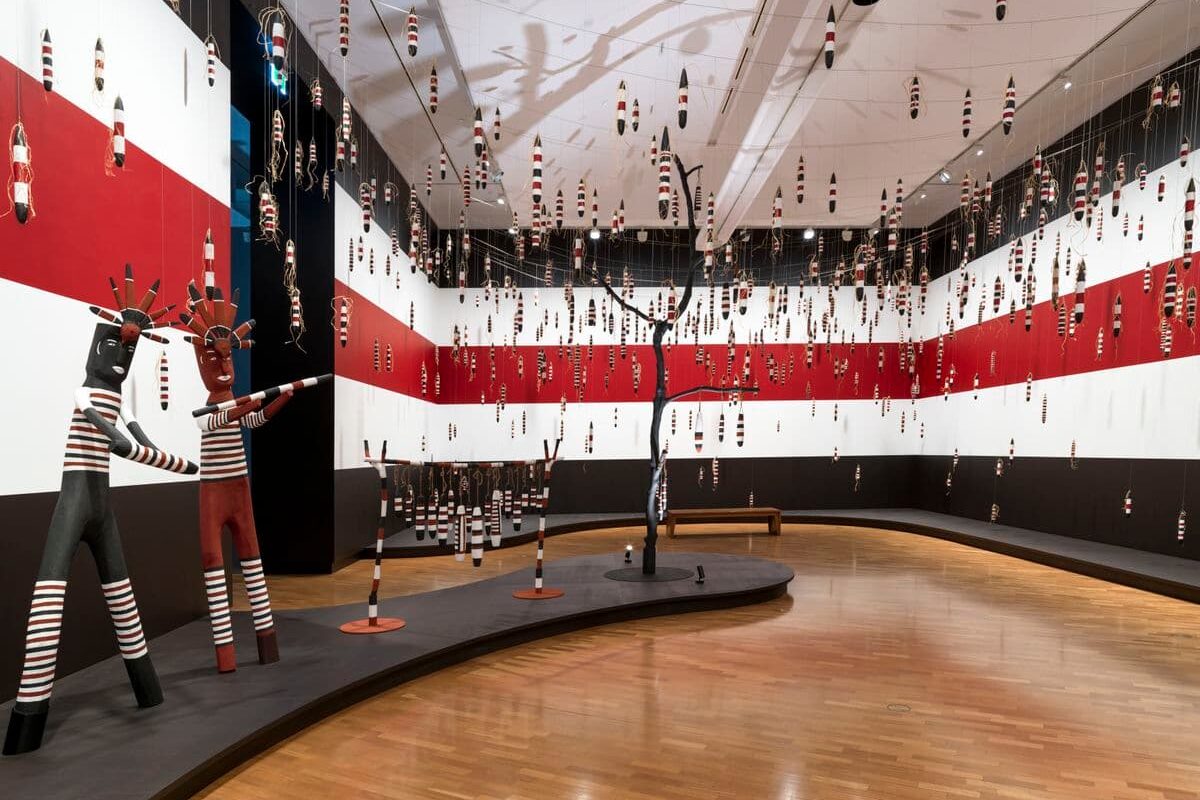
Moving further into the exhibition visitors pass under an installation by Alair Pambegan of his ancestors’ Flying Fox Brothers story. Carved and painted with red, white and black ochre, these 500 aerial sculptures are a fitting introduction to remind the viewer that we are moving into a different space and a different cultural experience.
The wide scope of the exhibition from traditional art to contemporary political commentary can be disconcerting but each of the 10 installations by 10 different artists from across Australia serves to remind us of the wide scope of indigenous art.
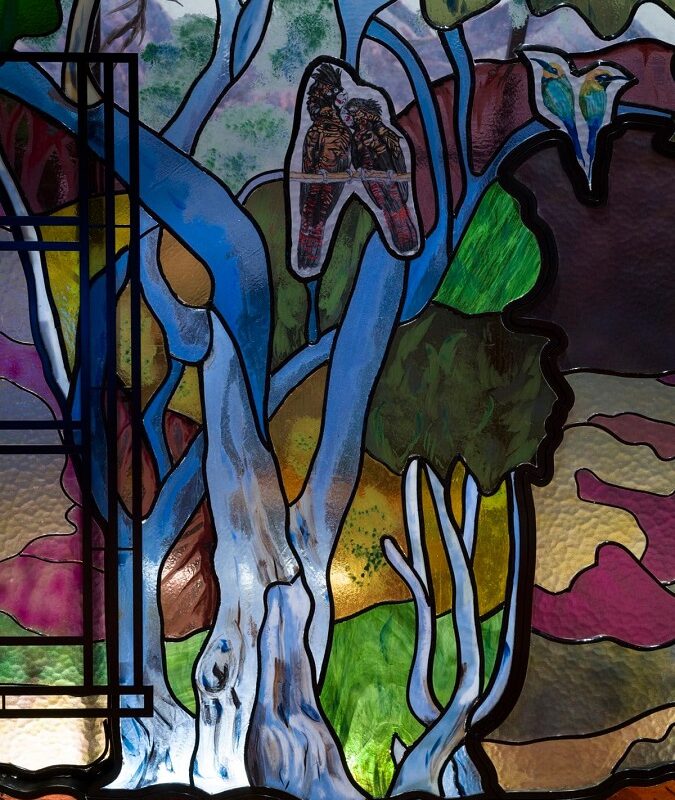
One installation is devoted to the heritage of Albert Namatjira. His small two-bedroom house still standing in Hermannsburg is reproduced in painted glass – a project aided by Canberra Glass Workshop. His influence is still strong as evidenced in the paintings of his descendants that accompany this installation.
Contemporary issues are explored through video and digital illustration. Jimmy John Thaiday, from Erub in the Torres Strait, works through video to chart the effects of global warming on his homeland and Dylan Mooney affirms the positivity of queer indigenous identities in a contemporary context.
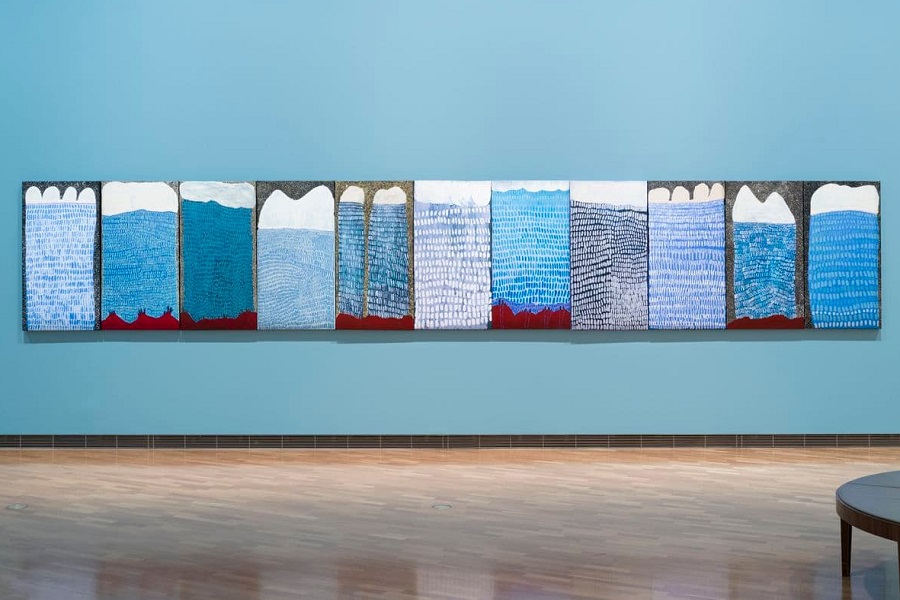
I left the exhibition accompanied by memories of Grace Kemarre Robinya’s evocative and poetic series of 11 panels showing the effect of rain on country with its promise of rebirth.
The exhibition is accompanied by a book, After the Rain, which is edited by Albert and based loosely on notes and photos he took to chart the progress of the creative project that became this exhibition. It provides great insight into these artists and the wellspring of creativity that is the background to this important exhibition.
News all day, every day at CityNewsQBN.com.au.



Leave a Reply