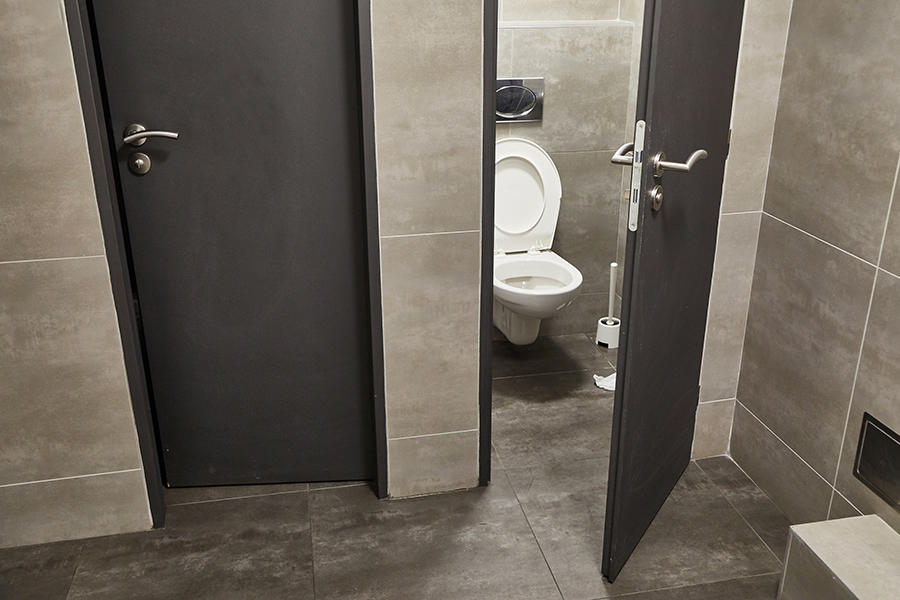
“When your model relies on what is effectively a toilet tax, it only reinforces one truth – in Canberra, it is literally crap for business,” writes GWYN REES.
It was many years ago when I first heard what a seasoned Canberra hotelier jokingly called “the toilet tax”.
 At the time, I was working with a lifelong hotelier family who owned three sites and a few hundred rooms.
The owner, Rod Morgan, was a memorable character, with a gift for the long yarn and the sort you were always trying to escape from. In the middle of one of his famously long monologues, he paused and said: “Do you know Canberra has a toilet tax?”
Rod told plenty of tall tales, but this one stuck with me. And in previous roles with the AHA and club industry, the cost of water for Canberra businesses always seemed out of step with the rest of the country. On this one, Rod was right.
Canberra has roughly 7800 hotel rooms across about 60 hotels. Under Icon Water’s current structure, every commercial property pays an annual charge for each flushing fixture beyond two. The charge is around $560 per toilet a year, and a hotel pays that whether a room is occupied or not.
A new 225-room property soon to open will inherit a toilet bill nudging $127,000 before it welcomes a single guest. And that’s before we even talk about the actual water used.
The other half of the problem is one most Canberrans don’t even realise exists. Unlike nearly every other jurisdiction in Australia, the ACT doesn’t have a commercial water rate.
Businesses pay the same potable water price as households, despite operating at different scales and economic purposes. And the pricing model here places a heavy burden on Canberra’s businesses, where water in and water out are significant costs for these employers and drivers of the territory’s economy.
With the ACT government as the sole shareholder of Icon Water, the pressure to maintain dividends has never been subtle. But when your model relies on what is effectively a toilet tax, it only reinforces one truth – in Canberra, it is literally crap for business.
The Independent Competition and Regulatory Commission’s review of the ACT’s sewerage tariff framework is long overdue. But with new tariffs expected by 2028, Canberra’s business community should already be doing the numbers.
After decades under a fixed-fee, toilet-count model, breweries, commercial laundries, car washes, food processors and hotels should see this review as anything but hypothetical.
A shift to volume or strength-based charging could materially replumb their operating costs and finally align sewerage pricing with the real drivers of the network.
The current lack of a proper liquid trade waste tariff would push the costs of high-impact users on to low-impact users. That is inequitable, but any correction will inevitably create winners and losers.
There is also a real risk, hotels with large kitchens, laundry or cleaning operations could face steep new costs if their wastewater is classified as higher-strength or higher-volume.
Reform must allocate costs fairly and include safeguards, such as pre-treatment incentives or tiered structures, so businesses aren’t penalised simply for operating at scale.
The commission’s promise of “revenue neutrality” simply means Icon Water’s total revenue remains unchanged, with charges reshuffled across users.
That protects the territory’s dividend stream, but avoids the harder question: why isn’t the review also hunting for efficiency?
If fairness, affordability and cost reflectivity are genuinely the goals, the overall burden on business must fall, not just shift.
While Icon Water reports a cost per customer roughly in line with other utilities, that figure appears to average households and businesses together, masking the disproportionately high costs carried by commercial users in the absence of a dedicated commercial water rate.
The scope of the review may also be too narrow. Water in and water out are two sides of the same equation, yet the ICRC is only examining wastewater charges.
If we’re discussing wastewater tariffs, shouldn’t we also look at a commercial potable rate? Any meaningful assessment of sewerage fairness must be balanced against the cost of water coming in, or else the total burden on business may simply migrate.
For hospitality, tourism and any business dependent on water, this review is a chance to inject some long-absent common sense.
Icon Water’s toilet-based charging system may be unique, but its impacts are not theoretical. They distort costs, undermine competitiveness and penalise the industries Canberra relies on.
Canberra’s toilet tax has been clogging the system for decades. Let’s hope this review finally gives it the plumbing overhaul it deserves.
Gwyn Rees is a Canberra-based business advocate.
News all day, every day at CityNewsQBN.com.au.




Leave a Reply