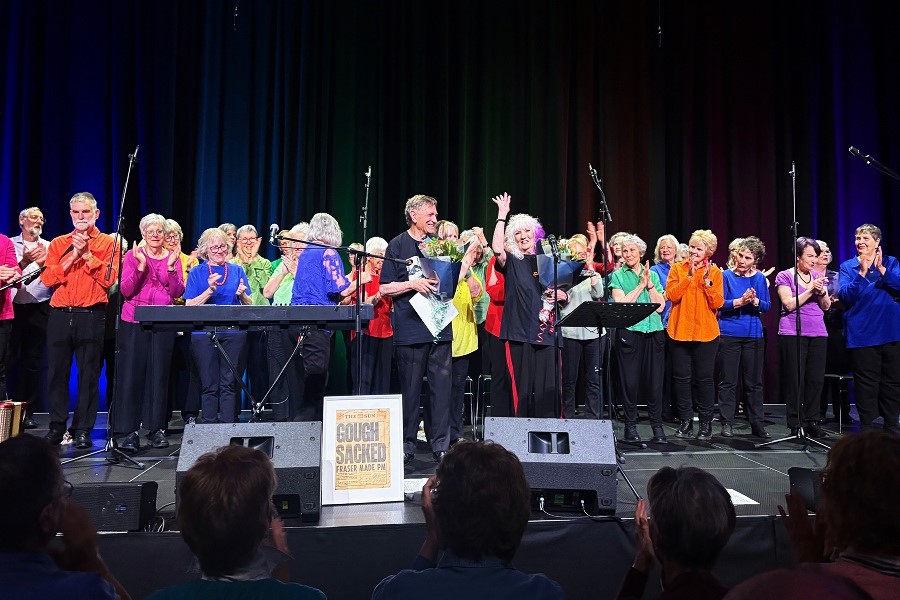
Musical Theatre / Well May We Say, Shortis and Simpson. At Belconnen Arts Centre, November 8. Reviewed by HELEN MUSA.
Shortis and Simpson’s presentation of their satirical show Well May We Say was, in essence, an act of celebration — a one-0ff public act of maintaining the rage that followed the dismissal of Australian Prime Minister Gough Whitlam in 1975.
The show brought together three threads — the political story, the story of Canberra at the time, and Shortis’ personal story. Played to a house of the converted, evident from the guffaws, snorts of derision and laughter that accompanied the numbers, it was both nostalgic and sharply observant.
This multi-layered show was part chronology of events leading up to The Dismissal, part portrait of Canberra – particularly Belconnen, where the tally rooms of the time were located – and part memoir. It looked at 1975 through the eyes of a young John Shortis, who experienced the whole drama while babysitting his one-year-old daughter and listening to the radio. She was in the audience last night.
To pull off this huge celebratory event, Shortis and Simpson got by with a little help from their friends – political journalist Karen Middleton, director Tracy Bourne, and theatre coach Lachlan Ruffy – along with Simpson’s formidable choir, Worldly Goods, who provided volume and gravity.
The evening began strikingly, with selected choir members stepping up to the mic as eyewitnesses to the events of November 11, 1975. One or two were the real people; others portrayed a secretary in Parliament House, a cadet journalist, an experienced radio journo, and more.
Then came the big title number, echoing Whitlam’s famous words. Ruffy appeared as David Smith, the governor-general’s official secretary, solemnly reading the proclamation dissolving parliament.
Much of the evening saw Shortis and Simpson narrating, singing, and encouraging audience participation – notably in a rousing singalong of Kev Carmody and Paul Kelly’s From Little Things Big Things Grow, recalling the Gurindji land handback when Whitlam famously poured soil into Vincent Lingiari’s hands. Everyone knew the words.
In an elegant surprise interlude, dancer Jacqui Simmonds performed the Duumvirate Tango, in honour of the two-man ministry led by Prime Minister Gough Whitlam and Deputy Prime Minister Lance Barnard in 1972.
Shortis and Simpson’s satire is rarely hard-edged. Their humour is jovial and often slapstick, even when portraying figures who were far more menacing in real life – such as former PM Billy McMahon (later dubbed “Tiberius with a Telephone”) and Joh Bjelke-Petersen, a peanut farmer to be sure, but now credited with helping bring down the Whitlam government through his cunning Senate appointment.
But Shortis is a clever and thoroughly researched writer whose brand of satire leans toward parody. We got Gilbert and Sullivan-style patter songs – Simpson as Sir John Kerr in I Am the Very Model of a Modern Governor-General – as well as large ensemble numbers set to nursery rhymes, folk tunes, and even a dash of Abba in Pretty Funny Money, covering the Loans/Khemlani scandal, with Simpson adopting a weird Swedish accent.
It was far more affecting when she played it straight, as in her moving song from the perspective of a cleaning lady alone in Parliament House at the end of that tumultuous day.
The latter part of the show canvassed the aftermath and shifting perceptions of Malcolm Fraser, as well as the impact of The Dismissal on Shortis himself, suggesting there was enough material here for two or three shows.
But seriousness was never the order of the day. The audience was out to have a thoroughly good time – while maintaining their rage – and they did.
News all day, every day at CityNewsQBN.com.au.





Leave a Reply