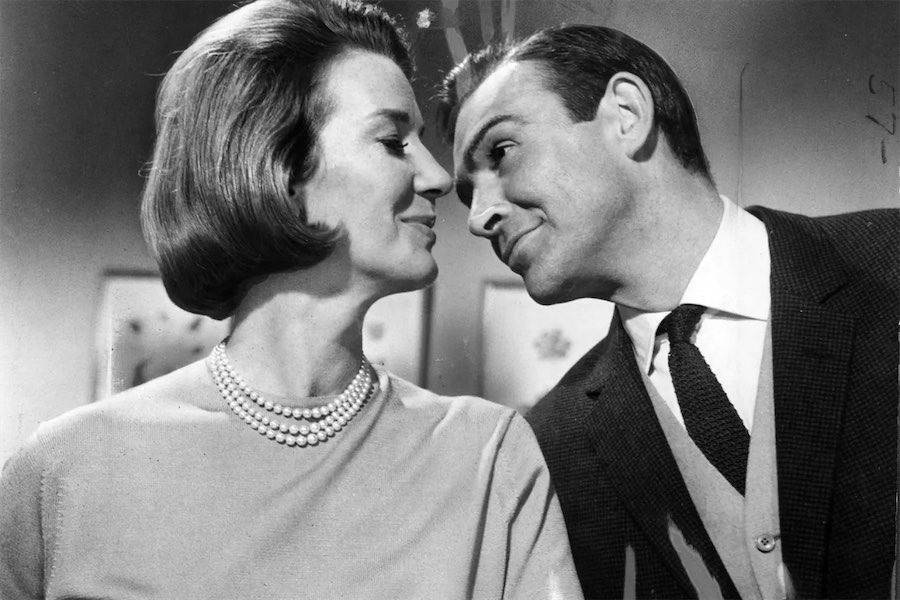
“James Bond’s codename, ‘007’, is universally spoken as ‘double oh seven’. Calling him ‘double zero seven’ or ‘zero zero seven’ wouldn’t have the same smooth, stylish rhythm,” writes Whimsy columnist CLIVE WILLIAMS.
“I started with nothing, and I still have most of it. Zero’s been very good to me.” –Groucho Marx
I suspect we all subconsciously have biases from our growing-up backgrounds.

I was brought up in a military family and was biased against civilians who said “oh” instead of “zero”. However, I have recently reviewed that particular bias and learned the following: The practice of calling zero “oh” probably originated because the digit 0 and the letter O look visually very similar in many typefaces.
I was surprised to discover that spoken English has used oh for zero for more than a century. It’s especially common when people are reciting strings of numbers, such as phone numbers, years, room numbers, or codes.
Saying “oh” takes less effort than “zero” and flows more naturally in conversation. For example, saying a number like 503 as “five oh three” is easier than saying “five zero three”.
The practice of substituting oh for zero first began with telephone operators, radio broadcasters, and others in the commercial communications field. It became common to say for a year, such as 1905, “nineteen oh five” instead of “nineteen zero five.”
People still say oh instead of zero in everyday language because it’s quicker and easier. The substitution of oh for zero rarely causes confusion because listeners can usually infer the intended number from the structure of the phrase or the surrounding numbers.
James Bond’s codename, “007”, is universally spoken as “double oh seven.” Calling him “double zero seven” or “zero zero seven” wouldn’t have the same smooth, stylish rhythm.
The use of oh for zero also works because the meaning is usually clear from context. When someone says, “oh eight hundred hours”, for instance, there’s no doubt that it means “0800 hours”.
However, in more technical or formal environments – such as mathematics, computing, aviation, or scientific communication – the two are not interchangeable.
In computing, zero has several important and distinct meanings depending on the context and is a key element in computer language. Presumably the reason why the Romans (who had no zero) did not have computer programmers.
There are, of course, other common substitutions for zero – such as “nil” used mainly in sports reporting, while tennis uses “love” instead of zero.
Incidentally, the word “nil” comes from the Latin word “nihil”, meaning nothing. British sports reporting adopted nil as a formal, slightly more elegant-sounding, alternative to zero.
With tennis, the most accepted theory for having “love” for zero is that it comes from the French word l’œuf (meaning the egg) because an egg shape resembles a zero. It is now part of the sport’s tradition and language.
On a lighter note: An engineer, a physicist, and a computer scientist are discussing which is the oldest profession.
The engineer claims priority. “Look at all that matter engineered into amazing constructs like galaxies, stars, and planets, it was clearly down to engineering.”
The physicist disagrees. “Before there were planets, the matter had to be made from chaos. Physics was responsible for all the quarks, gluons, photons and electrons that were generated out of chaos.”
The computer scientist coughs modestly and notes: “And which profession do you think created that chaos?”
And: Tom, Dick, and Harry are working on a building site when a crane topples over. Tom is crushed to death. Dick and Harry toss coins to see who will tell his wife.
Dick gets to pass on the sad news. Some 30 minutes later Dick returns with a six-pack of beer. Harry says incredulously: “You went to pass on the sad news about Tom and his wife gives you a six-pack?!”
“Well, not exactly” says Dick, “I rang the doorbell and she comes to the door and I say: “You must be Tom’s widow?”
She says, “I’m not a widow” and I say, “Do you want to bet a six-pack on that?”
And: Hector is blind but does parachute jumps for charity. A reporter asks him how he knows when he’s approaching the ground. “Simple,” says Hector, “the guide dog’s lead goes slack.”
Clive Williams is a Canberra columnist
News all day, every day at CityNewsQBN.com.au.




Leave a Reply