
Ian McEwan and John Banville are two of the leading contemporary British writers, but their latest books are not their best, says reviewer COLIN STEELE.
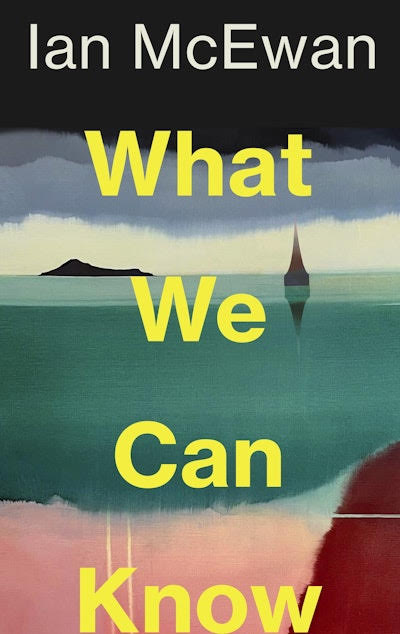
Ian McEwan’s What We Can Know (Jonathan Cape $34.95), a mixture of climate fiction and literary intrigue, begins in 2119 in a climate ravaged world accentuated by a Russian nuclear warhead catastrophe in 2042 and subsequent wars.
The tsunami-like “inundation” leaves the British Isles and Europe mostly under water, much of what remains of the US is a battleground of feuding warlords, while Nigeria is the leading world power as it maintains the global internet.
McEwan’s focus is solely on Britain, a “sleepy overlooked archipelago-republic”. The narrator of two thirds of the book, Tom Metcalfe, lectures at the University of the South Downs on the “crisis in realism in fiction between 2015 and 2030”, a period retrospectively known as “the Derangement”.
McEwan has said: “I imagine someone rather like me, passionate about literature and history, looking back on our time, [will be] filled not only with dismay at the decisions we took or didn’t take, but also with envy, because there are many wonderful things about our civilisation – especially in the first world – that he (Metcalfe) no longer has.”
Don’t take our world for granted, is McEwan’s message.
Metcalfe’s main research focuses on an English poet, Francis Blundy (1950-2017),who is rated “second only to Seamus Heaney”. Metcalfe sets out, from his downtrodden humanities department, by boat to a Bodleian Library relocated on a Snowdonian mountain top, to find the location of a missing manuscript “A Corona for Vivian”, that Blundy dedicated to his wife Vivian.
McEwan then shifts the focus, and narrative voice, to Vivian in the last third of the book, which takes the reader back in time to academic Oxford and a ménage à trois of Vivian, her first husband Percy, suffering from Alzheimer’s and her then lover Blundy.
McEwan has said his ambition here was “bring the past and the future and the present into a kind of dialogue”. The manuscript, eventually found by Tom, is far from what he expected, with McEwan providing another dramatic autobiographical denouement of the kind he delivered in Atonement.
In What We Can Know,McEwan juggles the solidity or not of memory, moral responsibility and subsequent guilt within a framework of our contemporary disregard for the impact of climate change on the natural world.
BOOKER award-winning author, John Banville, has said: “I have always wanted to write a ghost story. I’ve always wanted to write an erotic novel, and always wanted to set something in Venice – and this is as near as I get.”
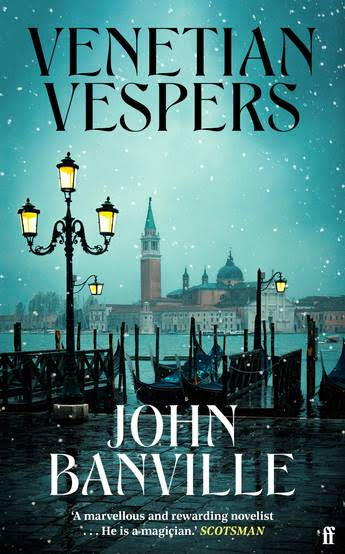
In Venetian Vespers (Allen and Unwin, $34.99), he certainly follows, perhaps not as successfully, in a literary tradition.
Banville comments: “Couples have been coming unstuck in Venice since Othello and Desdemona. There are the Baxters in Daphne du Maurier’s short story Don’t Look Now, Mary and Colin in The Comfort of Strangers by Ian McEwan… and while the love affair in Thomas Mann’s Death in Venice exists only in Von Aschenbach’s mind, the city is still his undoing.”
Banville’s dark gothic Venetian journey is set in the late 19th century. The narrator, Evelyn Dolman, a middling English writer, has just married Laura Rensselaer, the disinherited daughter of a rich American. They decide on a midwinter honeymoon in Venice, which will prove to be Evelyn’s undoing.
The couple stay in Count Barbarigo’s Palazzo Dioscuri ,but Dolman is to reflect on the nobleman: “The fellow was a charlatan, another player in the hackneyed performance that had been started up for the direct benefit, as it seemed, of my wife and me from the moment we first landed.”
Dolman becomes almost a marionette in a Venetian masque. On arrival, he leaves Laura to sleep and meets Freddie FitzHerbert, who claims to be an old school friend, yet Evelyn can’t remember him, and his sister Cesca with whom Evelyn becomes besotted.
The drunken Dolman returns to the palazzo, sexually abuses Laura and wakes up the next morning to find she has disappeared. Dolman’s world unravels as the police investigate Laura’s disappearance. Dolman is being set up but by whom and for what purpose?
Venetian Vespers echoes Henry James in linguistic richness, but lacks the subtlety of Banville’s recent crime fiction. His characters are almost caricatures, such as the distant and elusive Laura, Freddie. the public school cad and Rosalie, the sexually teasing serving maid in the palazzo. So, ultimately suspend disbelief and go with the melodramatic Venetian flow.
News all day, every day at CityNewsQBN.com.au.




Leave a Reply