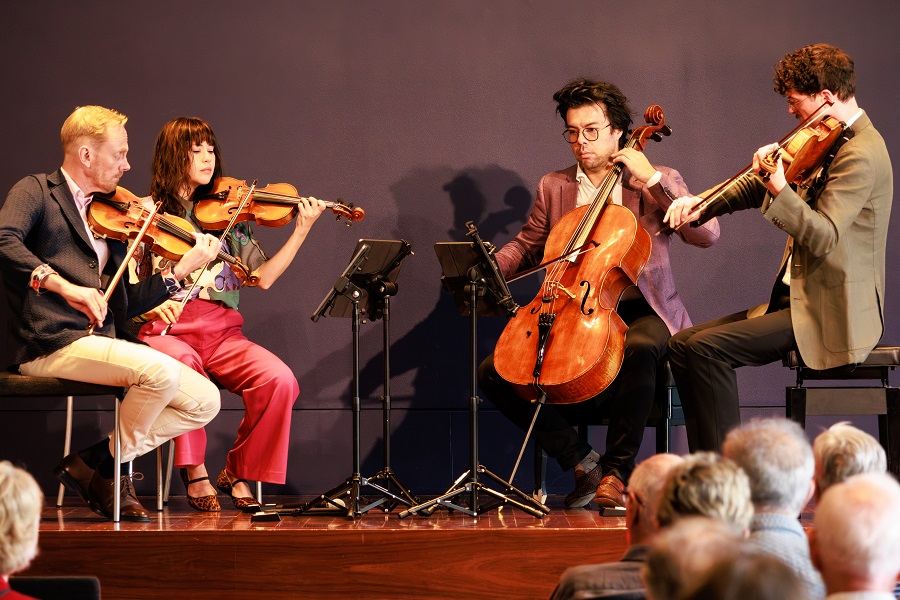
Music / Australian String Quartet, Convergence. At Gandel Hall, NGA, October 19. Reviewed by THAYER PREECE.
It is truly special to have the opportunity to witness world-class musicians on stage in our nation’s capital, and that was exactly what was on display in the Australian String Quartet’s concert, Convergence.
This year marks the 40th anniversary of the Australian String Quartet – the first state string quartet in Australia, sponsored by the SA government and the University of Adelaide.
Since its founding, 24 musicians have served in the organisation. The current members are Dale Barltrop and Francesca Hiew on violin, Chris Cartlidge on viola, and Michael Dahlenburg on cello. Hearing the music these fantastic musicians produce should encourage more states to invest in similar ensembles.
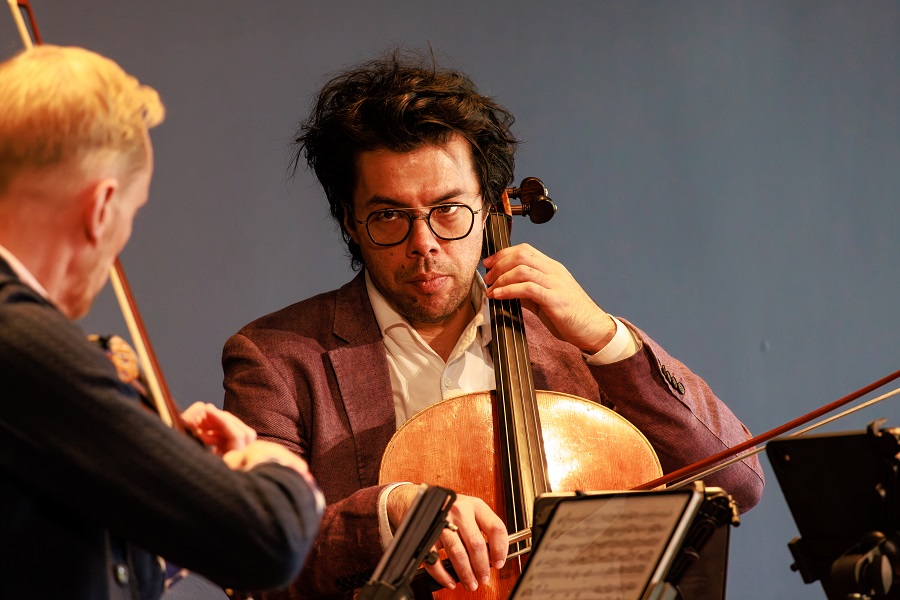
When speaking about the ASQ, it’s impossible not to mention the incredible quartet of instruments that its members have the privilege of playing. The ASQ owns four Guadagnini instruments made in the 18th century. The use of these matching instruments creates a cohesive sound across the quartet that other ensembles can only hope to emulate.
The ASQ strives to promote Australian music, and its first work, String Quartet No. 1, Elegies & Dances, by living Australian composer Paul Stanhope, did just that. The initial elegy section resonates with slow sighing motifs, as the first violin plays increasingly frantic passages over the top. One by one, the other players join the violin, becoming increasingly chaotic, before returning to the elegiac tone of the piece’s opening. This short but impressive work set the tone for the quality of performance that was to come.
The concert continued with Benjamin Britten’s second string quartet, introduced by violist Chris Cartlidge, who emotionally expressed his love of the work. Although the quartet opens simply for the instrument with an extended drone played on the C string, it later becomes obvious why Cartlidge loves the piece, as it particularly showcases the lower strings, and the viola sung throughout the piece, displaying impressive projection and skill.
The Britten showcased the extreme technical proficiency of the quartet, with demanding virtuosic passages for each instrument, as the focus was passed across all of the players. Each musician used every bit of their bow to pull a vast library of sounds and range of dynamics from their instruments in a way that only the most highly trained string musicians can accomplish.
Schubert’s beloved String Quartet No. 14, Death and the Maiden closed the program. Written as the composer was dying, the piece explores the composer’s struggle with his own mortality.
Unlike the Britten, which was more egalitarian, the Schubert heavily features the first violin, and Dale Barltrop shone in the piece, deftly traversing the length of his instrument through sparkling virtuosic passages. The quartet played unison sections with stunning accuracy, highlighting why full-time chamber musicians who play together regularly are such an asset to the industry.
News all day, every day at CityNewsQBN.com.au.


Leave a Reply