“Human eyebrows are more than just facial features – they serve important biological, social, and expressive functions,” writes whimsy columnist CLIVE WILLIAMS.
“Relationships, like eyebrows, are better when there is space between them.” –Demetri Martin
The human brow is the forehead area above the eyebrows.

You’ve no doubt pondered about the term “highbrow” as in “she assiduously pursued highbrow intellectual pursuits”.
The alternative is “lowbrow” non-intellectual pursuits associated with watching sports such as American football or viewing the Kardashians.
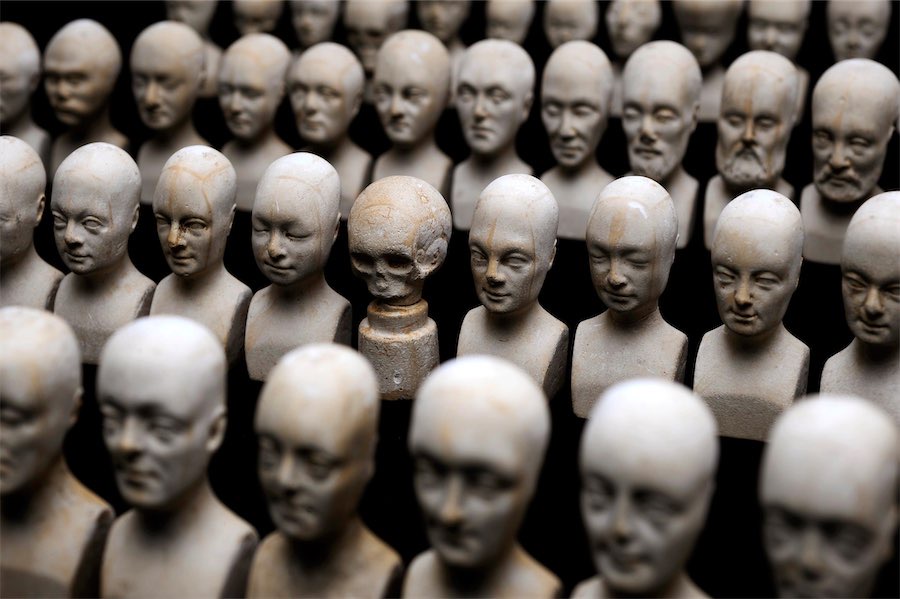
The terms highbrow and lowbrow actually come from phrenology, a now-discredited 19th-century pseudoscience that linked skull shape to intelligence and personality.
People believed that a high forehead (or “high brow”) indicated greater intelligence and refinement. A low brow was associated with more “primitive” or less intellectual traits.
Since eyebrows sit just below the forehead, a “high brow” would literally mean eyebrows with more space above them resulted in a larger or loftier forehead – hence, the metaphorical association with being more cultured or intellectual.
Human eyebrows are more than just facial features – they serve important biological, social, and expressive functions. Here’s a breakdown of what they do and why we have them:
- Biological function: Eyebrows help divert sweat, rain and debris away from the eyes. The arch and orientation of eyebrow hairs guide moisture toward the sides of the face, keeping vision clear. The brow ridge and eyebrows also help reduce the glare from sunlight, especially when looking upward.
- Social and expressive roles: Eyebrows are critical in conveying emotions such as surprise (raised), anger (furrowed), confusion (one raised), and (drooped) empathy. They enhance facial expressions and help others interpret how we feel. They also play a big role in facial recognition. In fact, studies show people have more trouble identifying faces without eyebrows than those without eyes.
- Cultural and aesthetic aspects: Eyebrow grooming has cultural significance and varies widely – from plucking, shaving and tattooing to threading, tinting and make-up shaping. Fashions change over time, for example thin brows in the 1990s vs fuller, more natural brows in the 2010s and beyond.
- Scientific facts: Eyebrow hair grows more slowly than scalp hair and follows a shorter growth cycle. Eyebrows are controlled by muscles like the frontalis, corrugator supercilii and orbicularis oculi. The shape of eyebrows is partly determined by genetics but also influenced by age and hormonal changes.
Bill Bryson, the author, noted that in France a chemist named Pilatre de Rozier tested the flammability of hydrogen by gulping a mouthful and blowing across an open flame, proving at one stroke that hydrogen is indeed explosively combustible and that eyebrows are not necessarily a permanent feature of one’s face.
On a lighter note (no pun intended): Two men are walking their dogs, a doberman and a chihuahua. They pass a pub and decide it’s time for a drink.
As they’re about to enter the pub, they notice a sign that reads “No dogs allowed”. The man with the chihuahua says: “That’s a real shame; I’m dying for a drink”.
“No prob,” says the other man. “Just do as I do.”
So saying, he puts on a pair of dark glasses and walks into the pub with his doberman. The barman says: “I’m sorry sir, but dogs aren’t allowed in here”.
“It’s okay,” says the man. “I’m blind you see, and this is my seeing-eye dog.”
“But I thought seeing-eye dogs were always labradors,” says the barman suspiciously.
“That used to be the case, but it’s recently been found that the doberman makes an even better seeing-eye dog than the labrador”.
Satisfied at last, the barman allows the man to come in with his doberman. Encouraged by what he has heard, the other man puts on his dark glasses and walks into the pub with his chihuahua.
Once again, the barman intervenes, saying: “I’m sorry sir, but dogs aren’t permitted in here.”
He replies: “But you don’t understand – I’m blind, and this is my seeing-eye dog.”
The barman, incredulous, exclaims: “That chihuahua is a seeing-eye dog?” The man replies: “A chihuahua! They gave me a CHIHUAHUA?”
Clive Williams is a Canberra columnist
News all day, every day at CityNewsQBN.com.au.




Leave a Reply