
Theatre / The Story of the Oars. At the Street Theatre until September 21. Reviewed by SARAH BYRNE.
Put together a script by a celebrated Australian author, some of the region’s finest actors, and a score composed and performed by a talented local composer, and what do you get?
In the case of the Story of the Oars, it turns out, something a little less than the sum of those impressive parts.
The music is the standout triumph of the performance, starting with a literal deconstruction – Jay Cameron takes apart panels of the centre-stage upright piano until left with a frame, strings, keys and pedals.
He then sits on the floor (or sometimes squats, with remarkable stamina) to pluck strings, reach up to the keys, and knock percussively to create a wonderful ambient soundscape that not only complements but improves upon the spoken word.
Nigel Featherstone (whose novel My Heart Is A Little Wild Thing, rightly brought him international recognition) has written a script that moves between theatrical forms, but which has been labelled, for good or bad, a play with music, including spoken word songs.
The challenge for the reviewer is in how to approach this. It would be quite unfair, and misrepresent the audience’s experience, for example, to describe Mozart’s Magic Flute by reference chiefly to the plot.
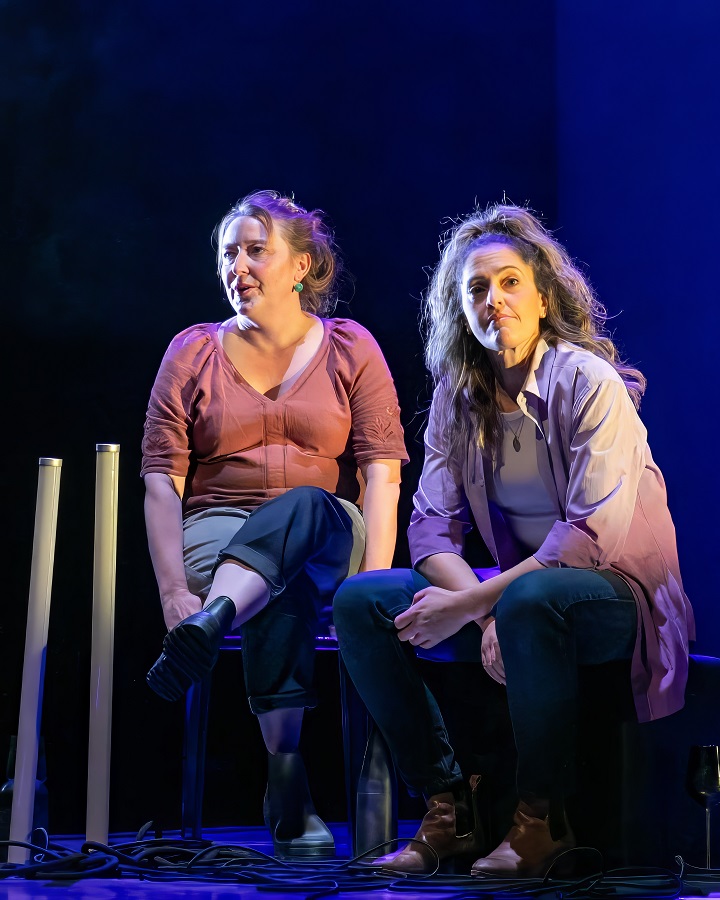
The plot of the Story of the Oars is, frankly, unconvincing, but excellent performances from the ensemble of Craig Alexander, Louise Bennet, Sally Marett and Callum Doherty, do much to overcome this, though too many motivations and practicalities are elided, and some emotional responses – such as the initial hostility between father (Alexander) and son (Doherty) – feel unearned.
However, Cameron’s music lends gravitas and credibility to the whole enterprise, so that ultimately the overall effect is reminiscent of Andrew Bovell if scored by John Cage.
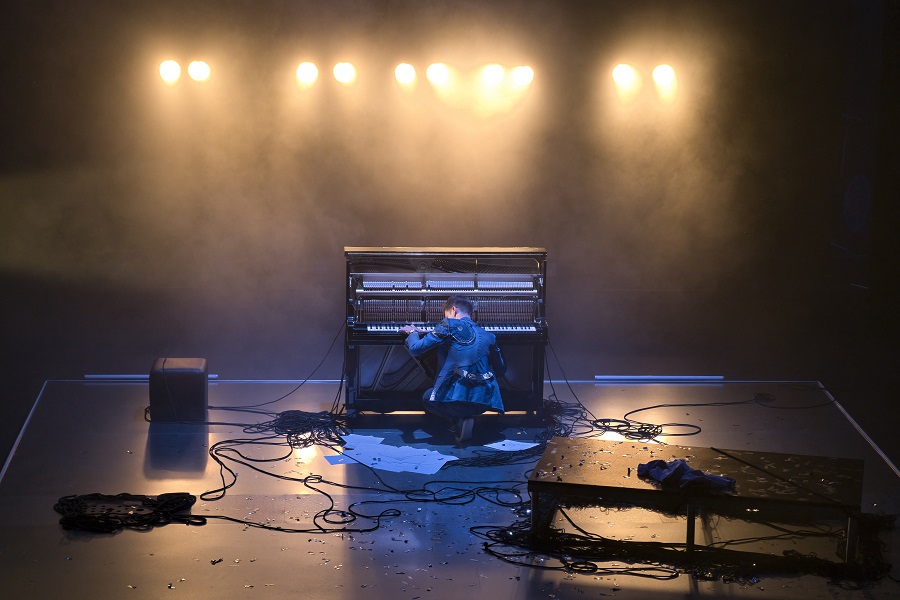
Cameron’s soundscapes are atmospheric, at times austere and laconic, at others lyrical and melodic, but always compelling.
Slightly less successful are the spoken word songs, generally because their digesic nature means it’s not always clear that they are songs until the variation in prose style strikes the ear. Considering the physical dexterity required to sustain the performance, and the central position of the piano on an otherwise almost bare set, his physical presence is remarkably unobtrusive.
The Story of the Oars succeeds, and is worth attending, but mainly because the music elevates the play. It was certainly well-received by the opening night crowd.
News all day, every day at CityNewsQBN.com.au.




Leave a Reply