“I was on a roll with my schtick until, five minutes in, I saw a young man staring bored, or worse, angry. Oh no, I thought. He’s found me out. He knows my feats are clay,” writes Kindness columnist ANTONIO DI DIO.
Just between you and me, I’ve faced a few tricky moments.
The ones when everyone is looking at you and you realise that you are just an appalling and hastily cobbled together fraud who has no business about to speak, run, administer CPR, prescribe, drive a lectern, or do anything else you’re about to, because not even Anthony Blunt was as big an impostor as yourself.
I have known self-doubt and she is a frequent visitor to my fragile heart, relentless in helpfully pointing out aspects of my character needing improvement.
Eventually, you get over most of it and get on with life. But the one thing that is still consistently scary is standing before a room full of undergraduates. Terror in the theatre, I reckon.
Years ago I was in a room full of beautiful fourth-year students, all computered up and piercing of eye, and thought that at last I had overcome my fear.
Years of talking to all sorts of people, press conferences, interviews and sage advising, but I still froze in front of students. Perhaps because I remembered that their time was precious, not because they had to race off to meet the minister or a clinic afterwards, but something more important and powerful.
They had to race off to study to get to the next place, or to their anxiously held part-time jobs, upon which so much of their lives precariously teetered, and here I was trying not to waste their time with goofery or take too much of it with gravitas. Like every impostor, I felt they deserved the best, or at least better than me.
The fascinating part about this lecture, in the beautiful ANU campus, was that the medical students were all smiling. They were positive and wishing the awkward klutz at the front well in his efforts not to mumble or fall over (fat chance).
I was on a roll with my schtick until, five minutes in, I saw a young man staring bored, or worse, angry. Oh no, I thought. He’s found me out. He knows my feats are clay.
From then on the whole thing was agony – 90 minutes of sneakily looking across at his zipped, thin-lipped grimace and not all the warmth and laughter from the 100-odd others could convince me that this was going okay.
The only thing that kept me going was seeing one of my own kids in the middle of the audience, who was neither in this course nor indeed residing in this town, but had snuck in to make rude gestures and try to put me off. Indeed, I have raised them quirkily, but this bloke really is a pest! Still, the love in it was pretty helpful.
We all Stockholm up to our tormentors at times and I’m no different. A group of students came down to say hello afterwards and were very kind, but I fronted up to the grimacing young man in the audience to greet him and perhaps find out his problem.
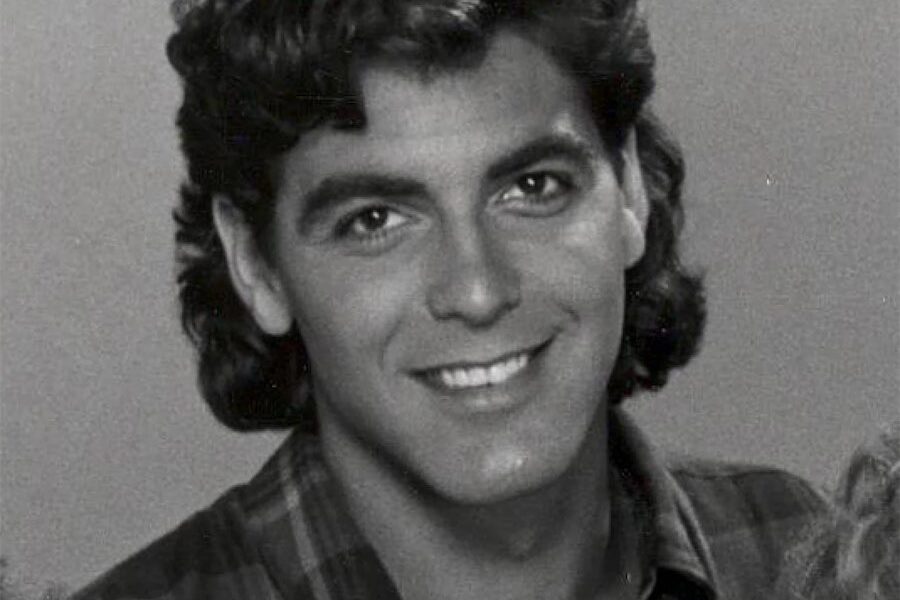
Before I even had a chance, his face split into the most dazzling hundred-watt smile since the young George Clooney graduated into E/R, and he said: “Thanks so much, mate, that was great”.
What is occurring, I thought, in delight but also a bit of confusion. I dared to ask and, it turns out, that this fine student (now a fine doctor hereabouts) suffers from RBF, a syndrome where one’s facial features at rest appear negative and grumpy, and completely belie the warmth and delight beneath.
He enjoyed my ridiculous attempts to be a lecturer, but his resting face did not show it. Didn’t matter much, as his animated one could, fair dinkum, launch more ships than a Spanish queen. Lovely young person.
You’d think I’d know better than to let one grumpy face in an ocean of warmth not put me off or feel failure.
European studies show doctors describe their day as poor if four per cent of their patients don’t leave happy, and disastrous if the number is any higher.
What we think of ourselves, what we expect of ourselves, how we judge ourselves, is a bar higher than even the exams those students had to scale.
Kindness starts with the person in the mirror – and she’s okay. And gratitude, too – especially for those residing in Canberra, a place with one of the finest medical schools I know, filled to the brim with people who care for this city with love and pride.
Local GP and ANU associate professor, Antonio Di Dio says he’s been a bad influence on medical students since the late 1980s.
News all day, every day at CityNewsQBN.com.au.



Leave a Reply