Visual art / Backbone. At ANU School of Art & Design Gallery, until August 8. Reviewed by SOPHIA HALLOWAY.
Backbone is a pointed choice of title for the ANU School of Art & Design Gallery’s latest exhibition.
Backbone includes nine artists who work as technical staff at the school – Emma Beer, Estelle Briedis, Sean Booth, Chris “Walrus” Dalzell, Louis Grant, John Hart, Mahala Hill, Catherine Newton and Emeirely Nucifora-Ryan.
Their role as technical staff is to keep the studios running, ensuring a safe and intellectually and creatively nurturing environment that fosters exploration and research, and importantly, as a model to students of pathways into creative careers. All this, they balance alongside their own artistic practice.
To be guided and taught by technical staff and faculty who are themselves accomplished artists is part of what makes an education at the ANU School of Art & Design so great, and it’s what is at stake with sweeping cuts taking place across the university.
ANU leadership have proposed merging the Schools of Music and Art and Design, and the Centre for Heritage and Museum Studies, into a new School of Creative and Cultural Practice, disestablishing 11 academic positions.
There is something distinctly Orwellian about overly simplified departments, which seemingly undermine the very practice it is named for. Another case in point is the new College of Systems & Society (formerly the College of Engineering, Computing and Cybernetics).
Fortunately for the ANU, proposed cuts to the literature department might prevent future students from making this connection.
The challenge for group exhibitions such as Backbone, which bring together a diverse group of artists based on an organisational connection rather than a thematic or mode of practice, is how to conceptually connect the works.
This method of curating could give off the disparate impression of a members show, or an art prize. In the case of Backbone, the connecting thread is a distinct sense of melancholy that one can’t help but attribute to the predicament that the School of Art & Design (and the ANU at large) finds itself in.
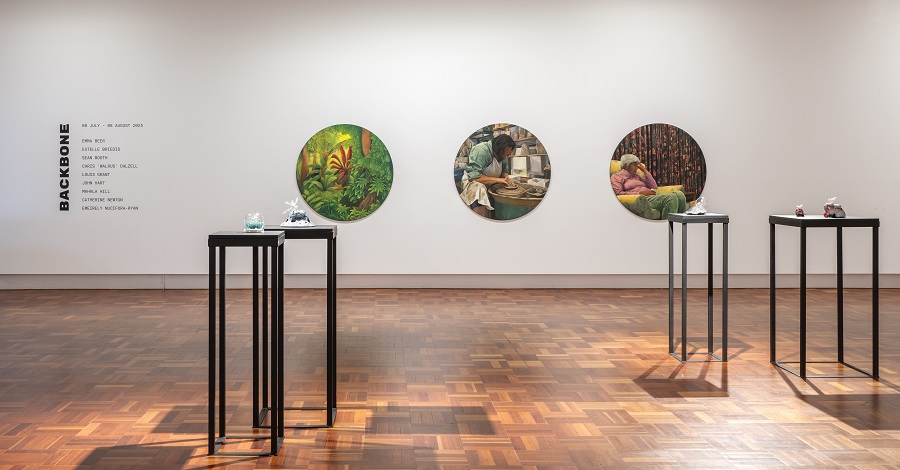
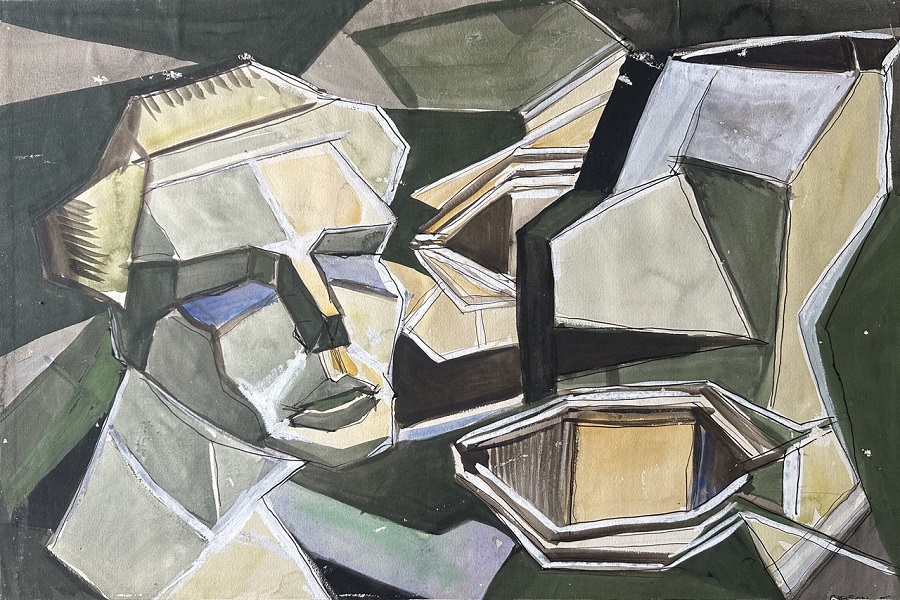
The exhibition is particularly sparsely hung. A scattering of plinths cut lonely figures in the centre of the room. There’s a vulnerability to many works. Hart’s paintings capture contemplative, intimate moments of a woman nodding off in a chair, or an artist in deep concentration at the potter’s wheel. Newton captures in glass protective hands cradling the hand and foot of a baby.
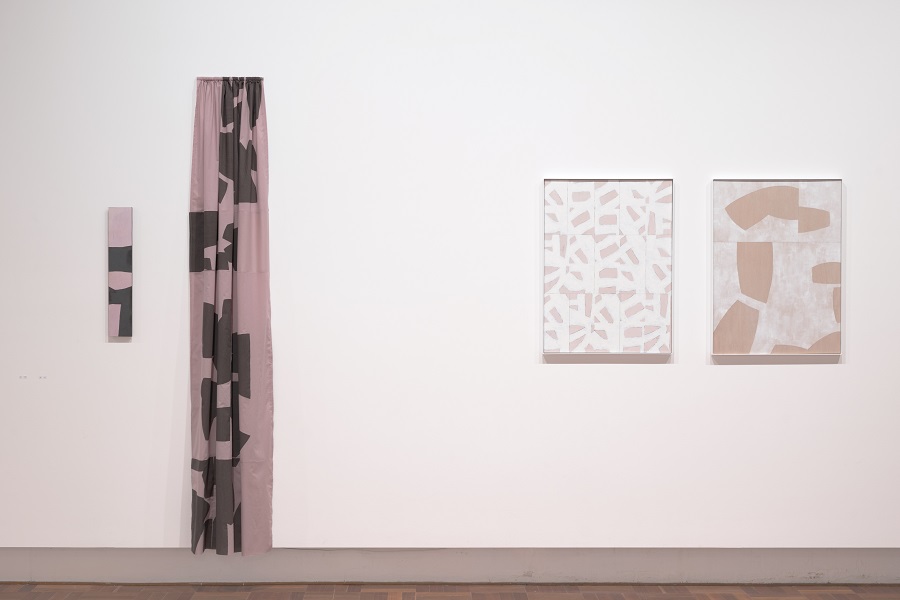
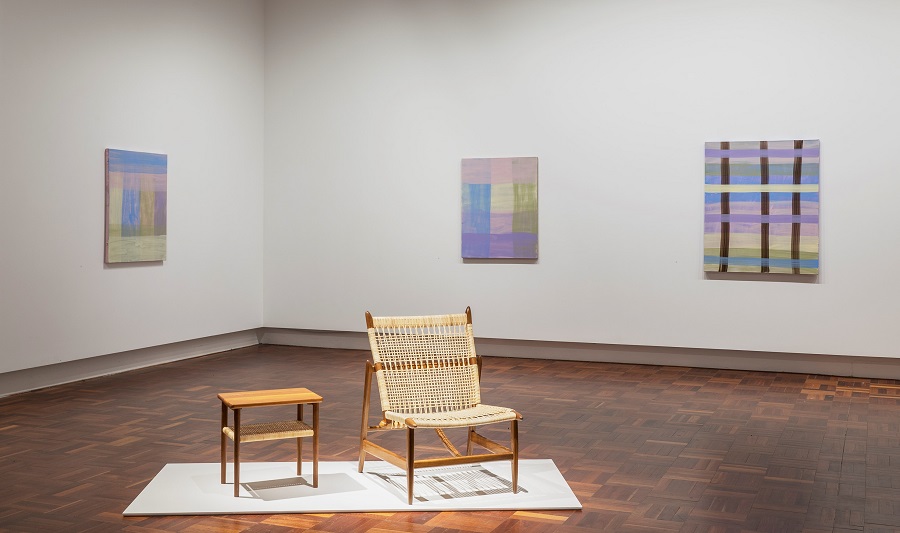
There are occasional moments of harmony among the works – Briedis’ gridded screenprints on plywood and cotton voile are mirrored by Beer’s paintings across the room, broad, textural brushstrokes giving the impression of the warp and weft of fabric. But for the most part, each work seems to stand alone.
Beer’s titles, and that of Louis Grant, are poetically coded, speaking to what these artists might be feeling. Nucifora-Ryan’s neon work, Technique is cheap, is defiantly self-deprecating.
Backbone presents a quiet strength and innate vulnerability that brings a sense of humanity to the lesser-known workforce which keeps the School of Art & Design running – for now.
News all day, every day at CityNewsQBN.com.au.


Leave a Reply