Visual Arts / Megalo 45 years of print – An archive exhibition. At Megalo Print Studio, Kingston, until June 8. Reviewed by KERRY-ANNE COUSINS.
Megalo is celebrating 45 years of printmaking with an exhibition from artists who have been associated with Megalo Print Workshop.
The exhibition is not only a celebration of Megalo’s past achievements but there is a deliberate emphasis on the present and future of the print workshop.
The works are not hung chronologically but are grouped in a sensitive and thoughtful way so that, although they are works from different artists in a variety of subjects and print processes, they relate to one another. Indeed, discovering these links and becoming aware of the subtle connections and nuances that flow between the works enhances the enjoyment of the exhibition.
Megalo was set up in 1980 by a group of artists and activists in a tin shed in Ainslie. Interestingly, it was intended as a project of Jobless Action for homeless youth. It has now grown into the largest open-access printmaking studio in Australia.
There is a good representation of posters that reflect social and political issues from the 1980s… and beyond. Family violence, violence against women, safe sex and Aboriginal land rights are among the social and political issues that are still relevant. William “Bill” Inkpen’s simple but effective poster, Young People Need Housing, dating from 1983, strikes a hollow note of government inaction that still resonates.
In our contemporary era Omar Musa’s poetic lithograph, Sambal Prawns, 2019, with its deceptively lighthearted imagery questions the sustainability of commercial ocean fishing and the means used to pursue it. Lucy Marquand’s beautifully realised images of four works called, Sydney Fish Markets, 2023, hung near Musa’s work could also be said to pose this same question.
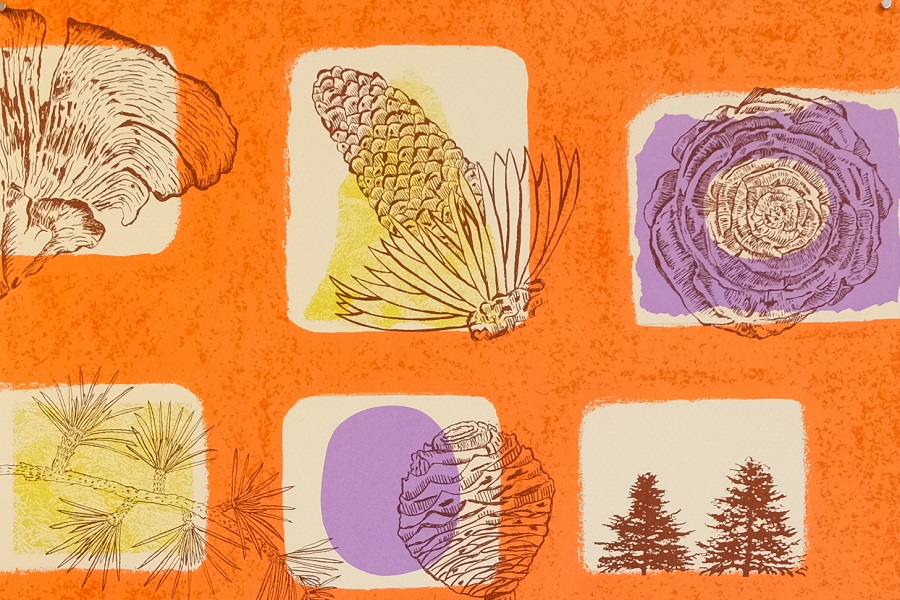
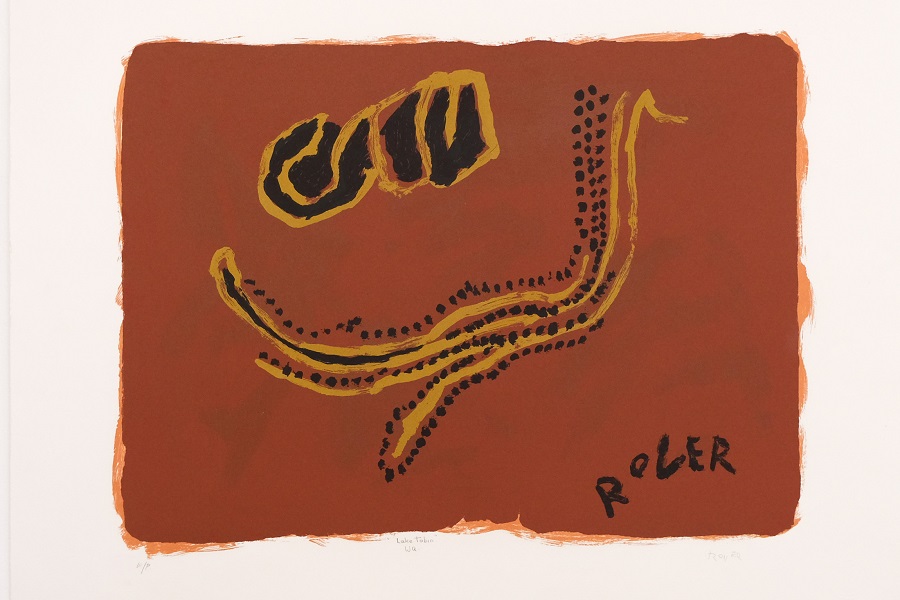
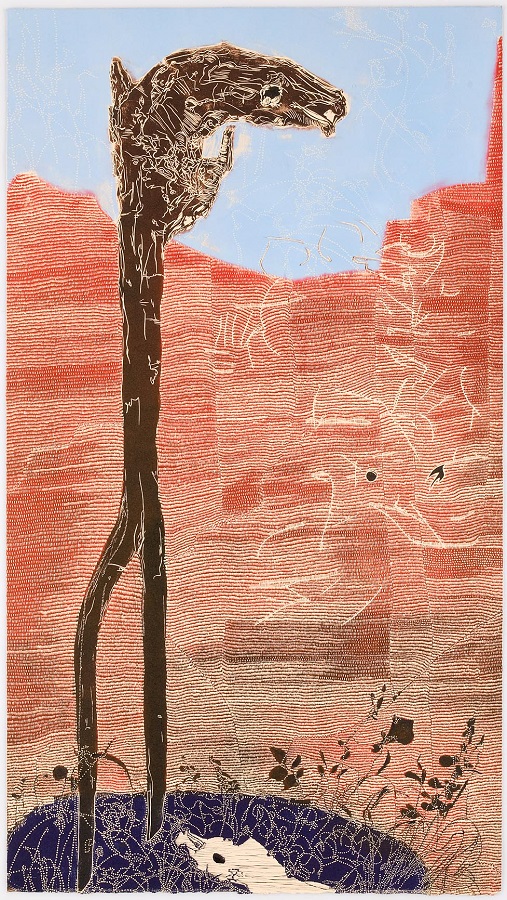
The theme of landscape celebrated in Rover Thomas’s large 1996 screen print – Lake Tobin WA – is a powerful statement of country. GW Bot also reads the landscape as a symbolic language of marks in her work, To Walk Across a Field, 2005. Annie Trevillian’s colourful screenprint – Bass Gardens, 2003 – delineates motifs of trees and their vital seed cones in a format reminiscent of a patchwork quilt.
A small work by Annie Franklin, Still Life with Tamarillos 2005, rewarded a closer observation to notice that the fruit is resting on a tablecloth decorated with a design of a fecund garden. Spring Picture, 2024 by Aiko Robinson is a delicate linear intaglio print of lovers that also heralds rebirth and new birth.
There is also wit and charm in Judy Horacek’s two 2001 graphics, The Lost Diva and Not Waving but Singing, and in the delightful portraits from a community print project at the Black Mountain School that continues Megalo’s community involvement and philosophy. With such an impressive and enjoyable line-up of these works in this exhibition I am left, like Oliver Twist, wanting more and I can’t help but wonder what else is there in the Megalo archives.
News all day, every day at CityNewsQBN.com.au.




Leave a Reply