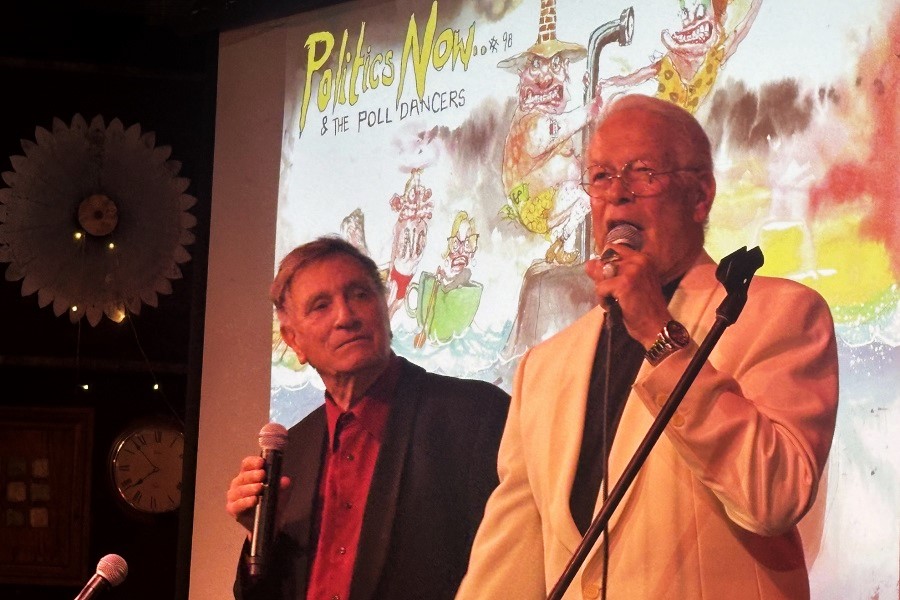
Theatre / 1966 And All That, at Smith’s Alternative, September 4 and 6, Braidwood Servicemen’s Club, September 5. Reviewed by HELEN MUSA
When Shortis & Simpson chose the title 1966 And All That for their new show with Keith Potger, a take-off of W.C. Sellar and R.J. Yeatman’s 1066 and All That, they had no idea that in that very year there had been a TEN Network TV show starring Carol Raye called 66 And All That.
Not to worry, the irrepressible satirical duo embarked on their research with added confidence that great minds think alike.
For musical (and Beatles) tragic, John Shortis, this project has been grist to the mill, so inevitably we discover that 1966 was the year decimal currency arrived, Harold Holt pledged to go “All the Way with LBJ”, and Danish architect Jørn Utzon’s departure from the Sydney Opera House project was engineered by unimaginative NSW Minister for Public Works, Davis Hughes.
Along the way, we learn that NSW Premier Sir Robin Askin’s notorious “Run over the bastards” remark about anti-war protesters can, improbably, be turned into a singalong.
Holt, we find, was no shining hero in spite of making inroads on the White Australia Policy, for it was he who sent the first conscripts to Vietnam in March.
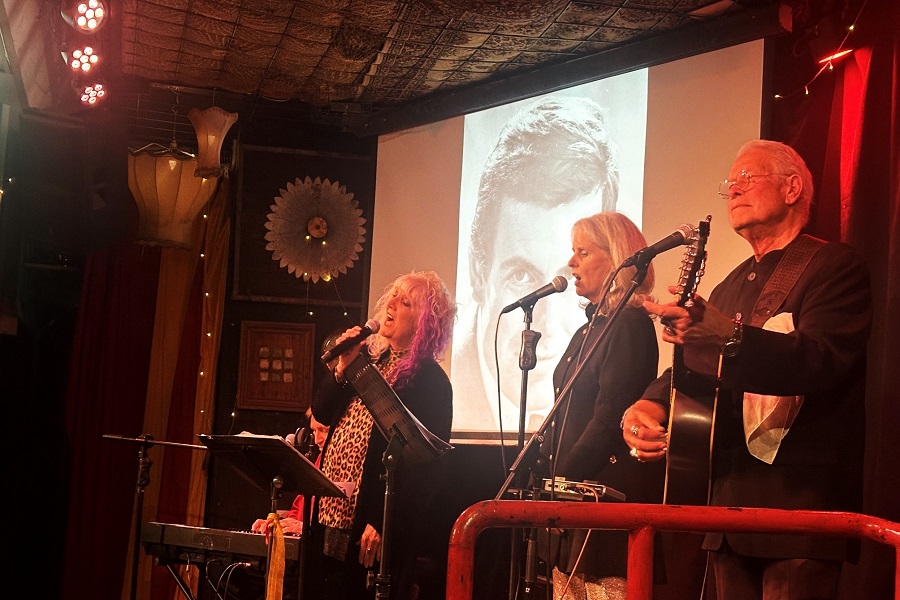
Meantime, Simpson was a Mod living the life in Swinging London, Shortis was discovering music in not-so-swinging Wollongong and Potger was striding the world stage as part of The Seekers, who were now teaming up with songwriters like Tom Springfield (Dusty’s brother) and Paul Simon.
For Shortis, 1966 was inevitably the year of Revolver, and Beatles songs form the backbone of much of the evening.
Potger recalls The Seekers at the height of their fame after The Carnival Is Over displaced the Beatles from the top of the charts. You know a star when you see one and it was undeniable that his smooth ease, charisma and tuneful voice shone through.
The packed audience hardly needed encouragement so when he invited them to join in for Yellow Submarine to Morningtown Ride, they sang along. Small matter that a few songs predated 1966, but no-one was complaining, especially in a spirited rendition of Nowhere Man.
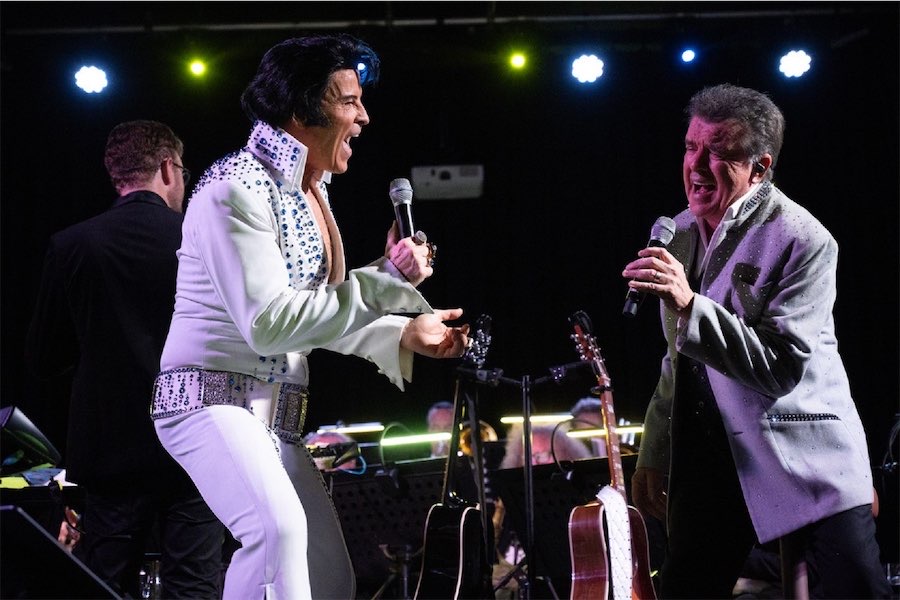
Potger is not known as a satirist, but it was his idea to turn Sinatra’s Strangers in the Night into Dangers from the Right, a swipe at current political movements in Australia, sung with Shortis in one of his rare departures from the keyboard.
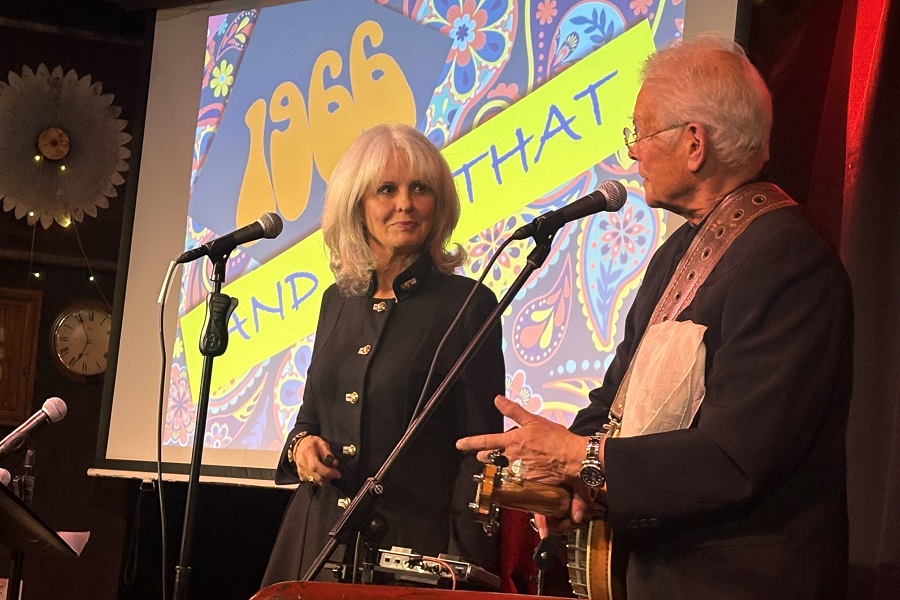
Photographer Liz Hawkes in her stage debut, joined in for several numbers and sang solo, before joining Simpson for an unexpected look at the fashions of 1966, illustrated with period images. Here in Australia, we were admiring Zara Holt’s dress sense while being shocked by Jean Shrimpton’s miniskirt at the Melbourne Cup, although the trend was fast catching on. Twiggy’s eye makeup was all the rage, so were long boots. And the Fab Four had a part to play in influencing the hair length of men.
But it was the music that prevailed. Simpson’s moving rendition of Michelle was a highlight, while reflections on the Beatles’ rivalry with the Beach Boys, Bob Dylan’s influence on their smoking habits and John Lennon’s notorious “more popular than Jesus” and his first meeting with Yoko Ono.
The formal part of the show concluded, inevitably, with The Carnival Is Over, although the local Fab Four returned for an encore with The Monkees’ I’m a Believer.
And that really was released in 1966.
News all day, every day at CityNewsQBN.com.au.


Leave a Reply