By Morgan Reinwald in Canberra
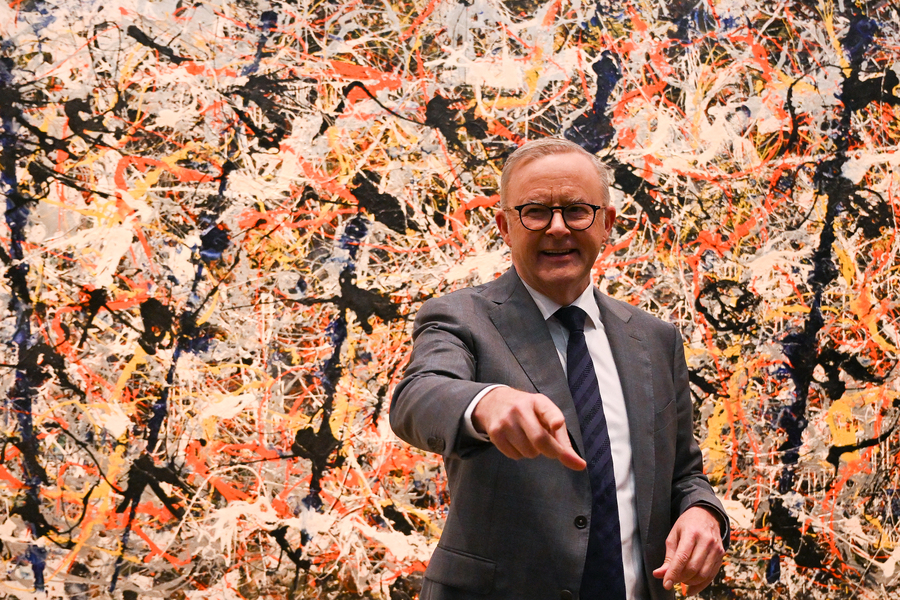
A painting that sent shock waves through the nation when it was purchased for more than a million dollars in 1973 is going on tour.
Jackson Pollock’s Blue Poles will depart the National Gallery of Australia for the first time in more than 20 years.
It cost taxpayers $1.3 million – equivalent to $15.5 million in 2026 – and at the time, became the most expensive piece of modern artwork ever purchased.
In 2023, it was valued at $500 million.
“Blue Poles changed our nation, so it makes sense that the nation gets to see it,” Prime Minister Anthony Albanese announced on Tuesday.
“That’s why we’re sending Blue Poles to Perth, making sure the west can enjoy this masterpiece and important part of our national story.”
It will be on display at the Art Gallery of Western Australia from April to September in 2027.
It’s part of a government initiative to share the national collection and so far, more than 300 prized artworks have appeared in 42 galleries across the country since June.
This includes more than 50 pieces from the renowned pop artist Andy Warhol, including his famous Campbell’s Soup Cans.
The venture to share the National Gallery’s prized collection with more Australians also aims to support regional and rural galleries.
Blue Poles is considered the most valuable artwork in the collection.
Painted in 1952, the abstract expressionist painting was completed at Pollock’s New York studio apartment.
Having abandoned traditional painting techniques and an easel years earlier, Pollock laid the large canvas on his studio floor to pour and splat paint over it.
Eight vertical stripes of blue paint stand out among the chaotic colour-work to make ‘poles’.
Pollock’s artistic style was famously ridiculed in America while he was alive, only to become recognised as one of the twentieth century’s greatest artists.
Prime Minister Gough Whitlam also copped widespread criticism when he decided to acquire Blue Poles, with detractors claiming the purchase was indicative of the Labor government’s flamboyance and economic ineptitude.
Deemed a waste of money, art critics suggested the gallery had fallen into the trap of the USA’s promotional system of art.
Mr Whitlam remained firm in his decision.
“If Australian galleries were limited by the comprehension of the right honourable gentleman they would be very bare and archaic indeed,” he said at the time.
The artwork’s home at the national gallery is undergoing construction works and Arts Minister Tony Burke said he doesn’t want the canvas collecting dust in storage.
“Blue Poles was railed against at the time as a waste of money and has proven itself to be one of the smartest investments the national gallery has ever made,” he said.
News all day, every day at CityNewsQBN.com.au.




Leave a Reply