By arts editor Helen Musa
“Faces are the most interesting things we see,” the late English artist David Hockney once said.
“Other people fascinate me, and the most interesting aspect of other people, the point where we go inside them, is the face.”
With that thought in mind, curators Magda Keaney and Warwick Heywood have prepared David Hockney: Portraits in Print, opening at the National Gallery on September 5.
When I catch up with Heywood, the Kenneth E Tyler curator, International Prints and Drawings, it is clear that this is not an exhibition hastily assembled following Hockney’s death, aged 88, in June. Planning began in 2025, although both curators agree that its arrival now is an especially appropriate way to honour the artist.
His death has also provided an opportunity to look deeply into the Hockney archives and those of eminent American printmaker Kenneth Tyler.
Hockney and Tyler began working together in the 1960s, developing a highly experimental creative collaboration. After Hockney moved to America, he became the only artist to work at all four of Tyler’s studios, producing some of his most important print works there.
The National Gallery’s relationship with Tyler goes back to 1973, when inaugural director James Mollison purchased Tyler’s private archive of printer’s proofs, rare proofs and drawings.
In 2002, during Brian Kennedy’s directorship, the gallery expanded the collection through a combination of gifts and purchases from Tyler, making it the most comprehensive post-war American print collection outside the US.
This is mostly a National Gallery collection show, with minor exceptions, Heywood says, made possible by the extraordinary depth of the gallery’s Hockney holdings. With more than 1000 works by the artist, the NGA has the largest and most important collection of his work in Australia.
It was also under Kennedy’s watch that the gallery acquired Hockney’s huge painting A Bigger Grand Canyon in 1999. It is far too large for this exhibition, Heywood tells me, but will no doubt be in visitors’ minds, particularly after it was loaned to the Fondation Louis Vuitton in Paris last year for David Hockney 25 and seen by almost one million people.
However, for Heywood and Keaney, the National Gallery’s head curator, International Art, it is Hockney’s experimentation that makes him one of the most exciting artists of our time.
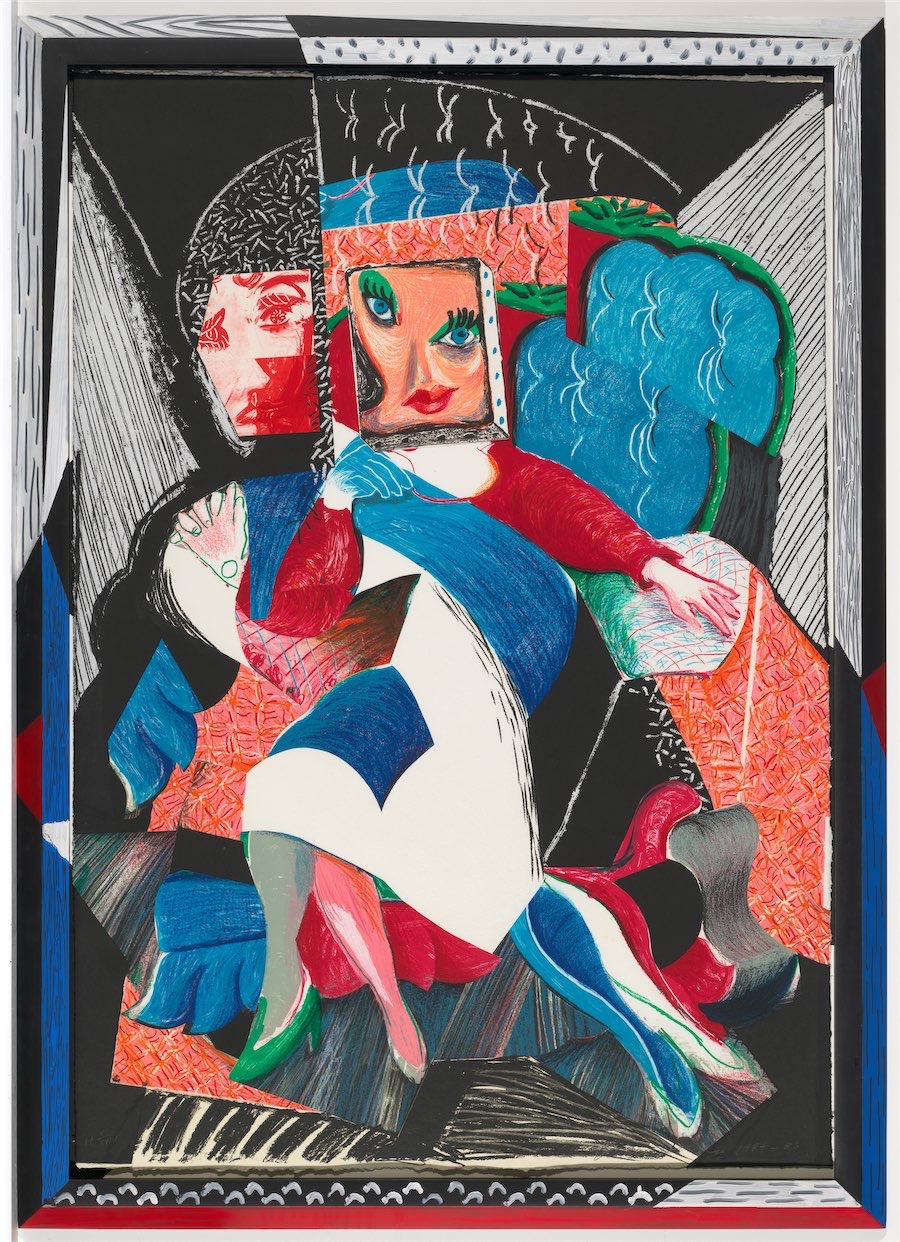
The exhibition recalls some of the fun of his early Pop Art work in the 1960s and 1970s, including his celebration of gay life and community, but a more significant thread is his fascination with friends and family, reflected in some of the remarkable prints he made during the 1970s and 1980s.
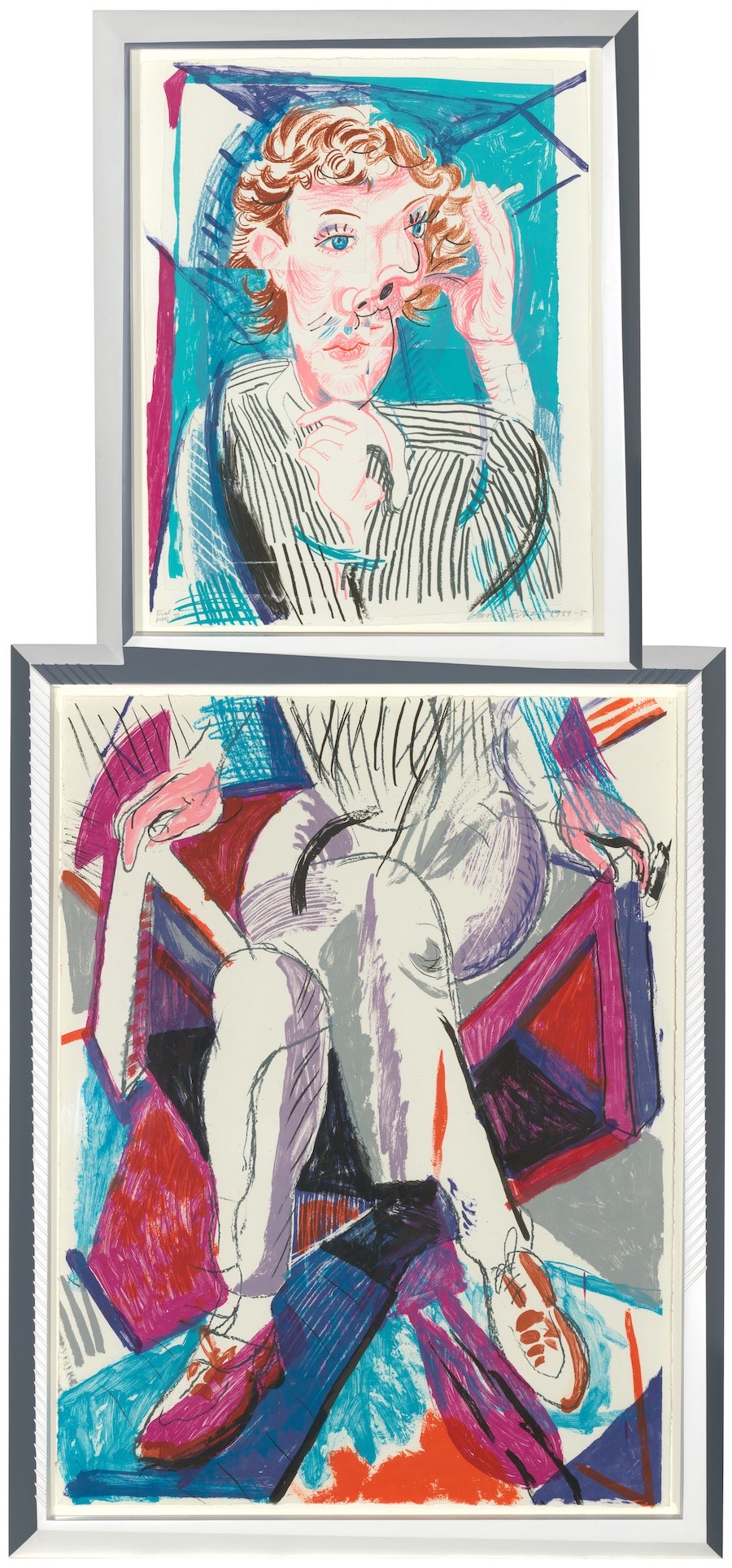
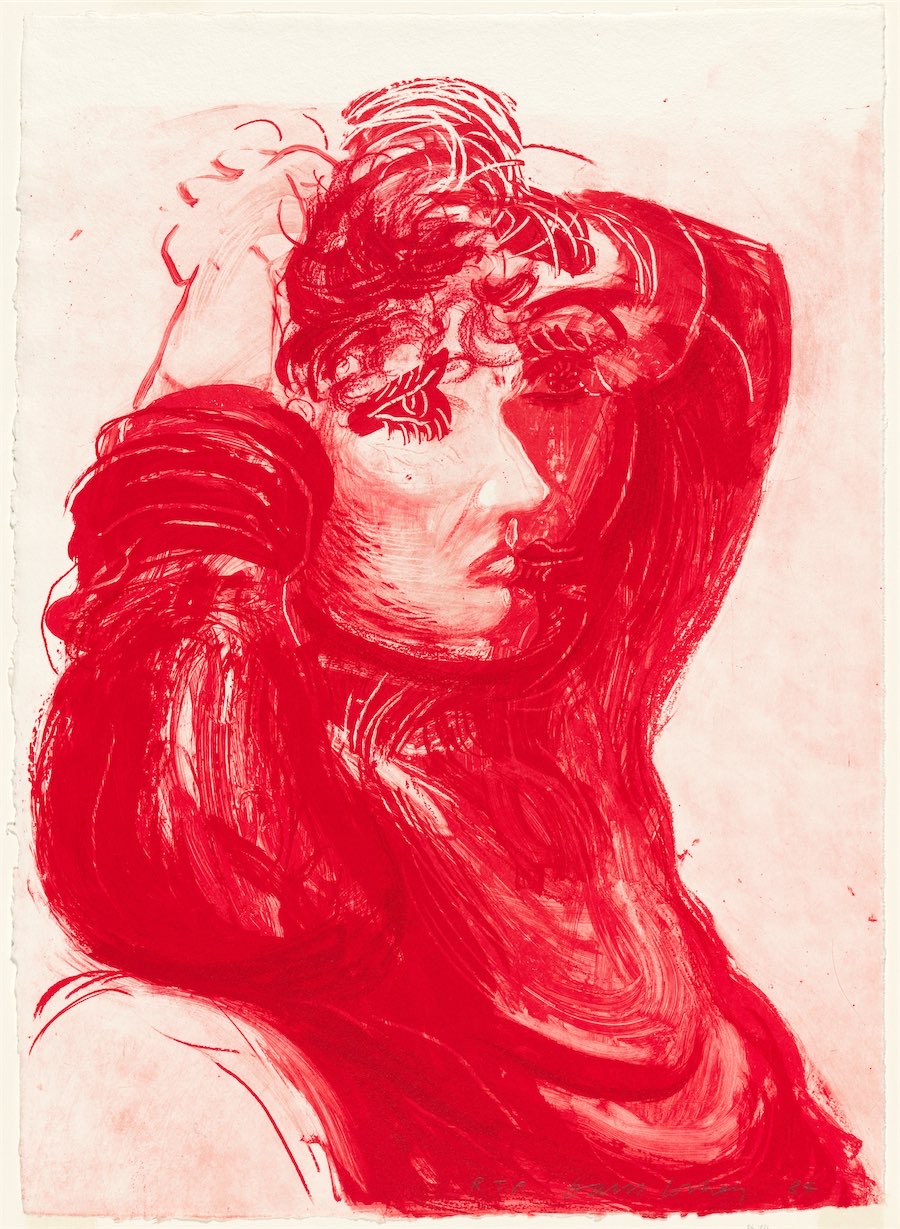
Heywood stresses that although Hockney returned to portraiture throughout his career, he very rarely accepted portrait commissions. Instead, there were particular faces to which he returned again and again, including his mother Laura, fashion designer Celia Birtwell, partner Gregory Evans and, most of all, himself. Hockney created more than 300 self-portraits.
Although the ground-floor exhibition space is not large, the curators believe they have enough room to explore a bigger question: what exactly is a portrait?
It is a question Keaney knows well, having worked at the National Portrait Gallery in London, and the exhibition uses Hockney’s constantly changing approaches to probe the boundaries of portraiture.
The show looks, for instance, at the 1980s, a decade that might conjure up images of parties and dancing, but which for Hockney was also a period of intense investigation into technology.
He once told Tyler: “I love the way really advanced technology is bringing back the hand again”, seeing in new technology another form of intimacy.
That experimental spirit is evident throughout the exhibition. There are etchings, lithographs and photographs, alongside Hockney’s iPad drawings, borrowed from the David Hockney studio. There are also works created through more unexpected processes, including Mylar sheets and fax machines.
Yet portraiture remains the key.

Hockney repeatedly turned his attention to the people closest to him, while also looking at faces through different artistic lenses. In one series, he explores the moving focus technique; elsewhere, familiar faces are transformed through Cubist approaches.
Even before the exhibition has opened, passers-by can see something of its visual energy through the bright colours being used in the installation. The curators have taken their cue from some of Hockney’s frames at Tate in London.
“We wanted to introduce a new generation to Hockney,” Heywood says. “We wanted to highlight Hockney’s last few decades that were filled with colour.”
David Hockney: Portraits in Print, National Gallery of Australia, September 5-May 9. Free exhibition.
News all day, every day at CityNewsQBN.com.au.


Leave a Reply