“While the conventional wisdom seems to be that Pauline Hanson’s rise has been a function of mass disillusionment with the major parties, I suspect there is more to her popularity than mere protest,” writes political columnist ROBERT McMAHON.
First a confession: by virtue of the condemnation and mirth associated with its original utterance 30 years ago, it is apparently a most shameful and reprehensible confession.
Dr Robert McMahon.
I, like Pauline Hanson, did not know what the word “xenophobia” meant when she gave her infamous “please explain” interview in 1996.
Except there was a difference between me and Hanson, the fishmonger turned accidental politician. By that stage, I had had a quality education at a Sydney selective boys school and had been awarded a bachelor of economics with honours by research from the University of Sydney.
And yet, with that embarrassment of educational riches, I was also unfamiliar with the term “xenophobia”. Like, I strongly suspect, 99 per cent of the population at the time. Indeed, I would warrant that the word only came into more common usage after Hanson so famously stumbled over it.
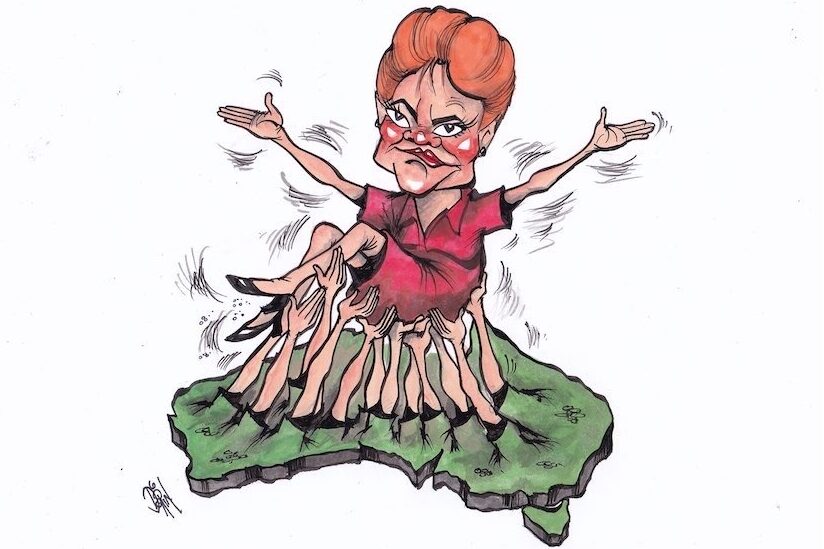
So while Hanson in the 30 years since she burst on to our political stage has been a political outsider, she has also been an insider in the sense of her everyday resonance with ordinary Australians. One of the 99 per cent prepared to say it as she sees it. However that might be: measured or outrageous; evidence-based or conjectural.
But ever without the burden of having to follow through on her pronouncements in the form of governance.
Recently on a bus trip to Sydney, I had an opportunity to review in some detail social media commentary in the immediate aftermath of her address to the National Press Club.
Two themes struck me. First, the political class – the major political parties and the establishment media – is concurrently amazed and not a little frustrated that Hanson has been “allowed” to ascend to such political heights absent much policy scrutiny.
And second, despite the absence of that policy platform, the single most word or sentiment I saw everyday people use to describe her was “authentic”.
While the conventional wisdom seems to be that Hanson’s rise has been a function of mass disillusionment by the voting public with the major parties, I suspect there is more to her popularity than mere protest against the big parties.
In recent weeks, I have written how in breaking unequivocal promises, Prime Minister Anthony Albanese has diminished his trustworthiness. This, off the back of Australians’ electoral rejection of the former PM Scott Morrison’s trickery and his government’s all-too-ready acquiescence to covid quackery.
Viewed through this prism, it seems to matter little to the voting public that Hanson’s policy platform is wafer thin. Rather, what seems to resonate is what she says – and how she says it. And, despite often being a mile wide and an inch deep, her pronouncements are perceived as being heartfelt and sincere – of being authentic.
Australians used to have a term for such a trait, long since out of usage: “fair dinkum”. To be fair dinkum was the ultimate test of trustworthiness; of assurance. A sort of cultural nod that something, or someone, was the real deal. That they could be relied on to say what they think and do what they say.
And so, at least for the moment, many Australians seem to have formed the view that the major parties’ policy finery is only as good as it can be trusted. And both sides over the last decade have acted in such a way as to break that trust. To fail the collective fair dinkum test.
Enter the straight-talking, plain-speaking senator from the sunshine state.
The problem, of course, is that government requires more of its leaders than just being perceived as genuine. It entails the confidence to exercise judgment about vast and detailed complexity, and to competently manage competing domestic and international forces.
So, while Australians may well be presently giving the major political parties the kick up the pants they arguably deserve, a time will come when we will have to go to the ballot box and carefully judge who can confidently and competently govern us.
Australia is at the forefront of great technological opportunity. But we are also on the precipice of great risk: economic, social and strategic. How our governments act in the next decade could set our course for the next half century.
And it is in this broader context that Hanson’s current resonance for her ordinariness will be tested – and her perceived personal authenticity pitched against her judged professional competence to govern.
Today’s voting Australians are therefore charged with a great responsibility – to ourselves but also to future Australians. As much as our politicians have let us down in recent times, the bigger question is whether we will measure up to our electoral responsibility to do what we judge best for our country: now and for the future.
Dr Robert McMahon PSM is a visiting fellow at the Australian National University, adjunct professor at the University of Canberra, and former assistant secretary of the Department of the Prime Minister and Cabinet.
The attack on Helen Haines has forced politicians to confront the ugliness of political discourse, but lasting change will require a broader reckoning with society’s growing incivility, writes political columnist MICHELLE GRATTAN.
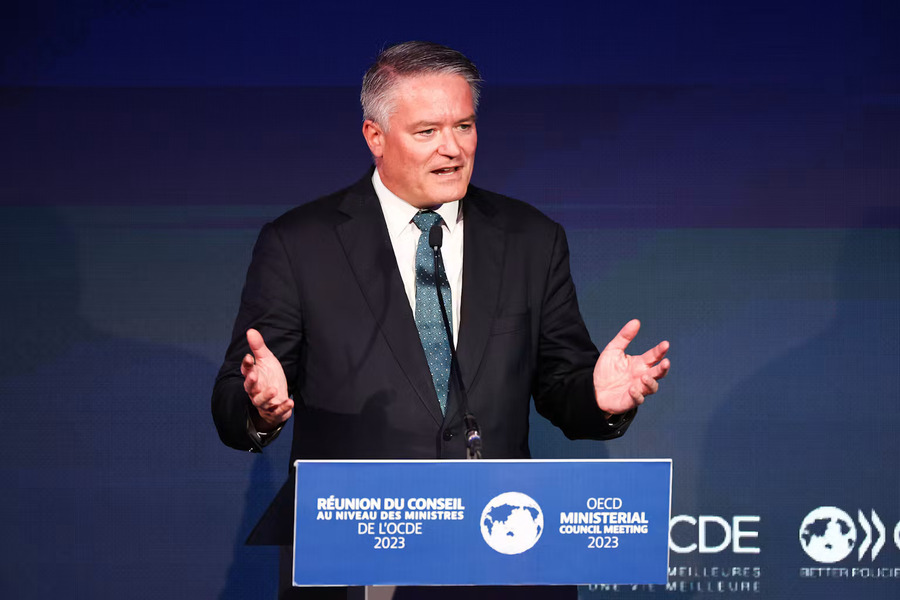
For political columnist MICHELLE GRATTAN, Mathias Cormann’s warning against imitating populists carries a pointed message for the Coalition as it struggles to counter One Nation’s growing appeal.



Leave a Reply