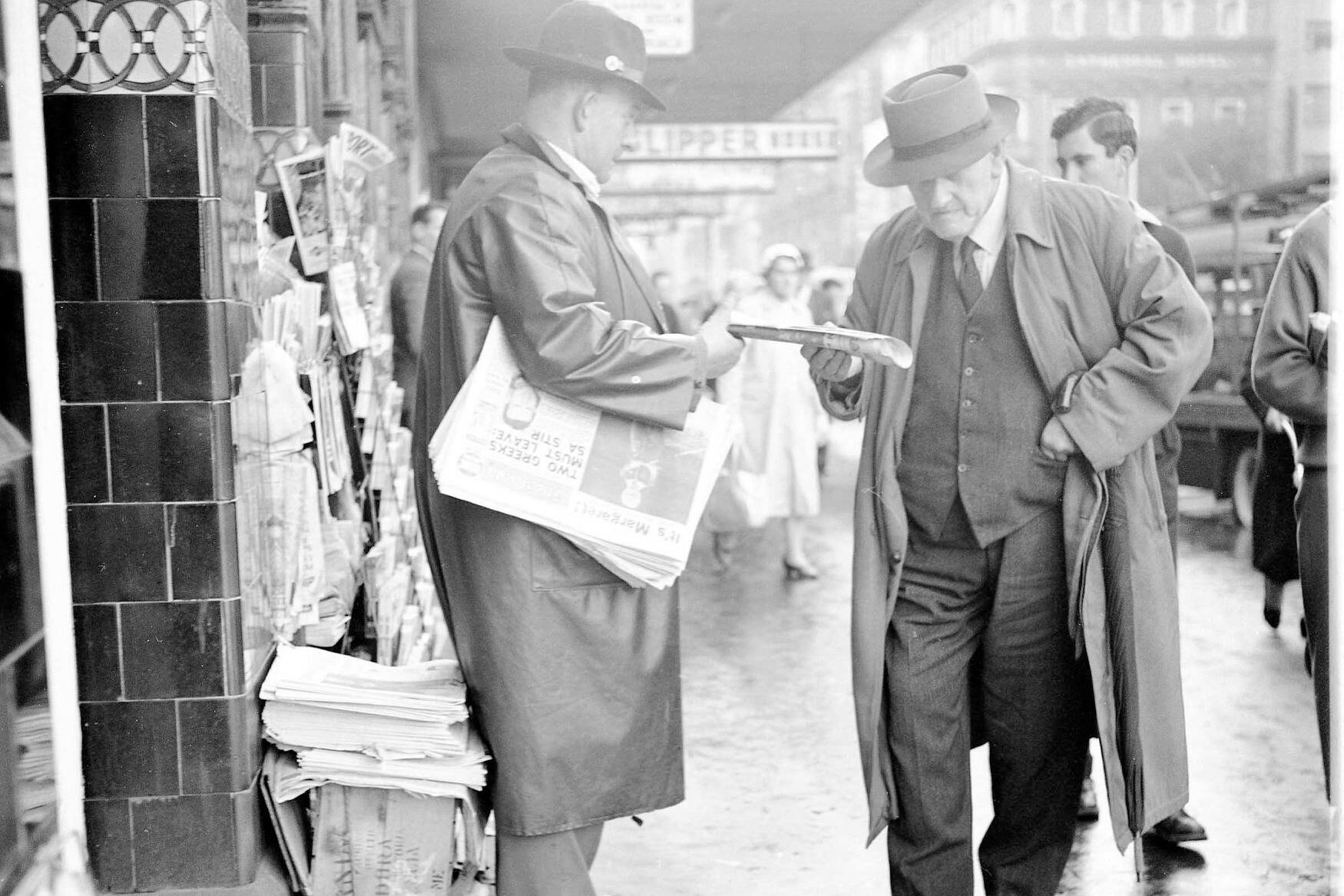
“It was an awesome display of the power of the press, with the newspaper proprietors easily defeating an elected cabinet minister.” Historians ROSS FITZGERALD and DICK WHITAKER recall how the Commonwealth Censor took on the media… and lost.
During times of war, the government of the day is invariably conscious of how the local media is portraying the conflict, and above all, very concerned about the publishing or broadcasting of any material that might benefit the enemy.
During World War II in Australia, one of the governmental portfolios was Minister for Information, who had sweeping powers with regard to censorship, and indeed was directly in control of an important public official, the Commonwealth Censor.
In 1944, the Minister for Information was Arthur Calwell, who was serving under Prime Minister John Curtin. Calwell would eventually lead the Labor Party in opposition, only to miss out on becoming prime minister during the federal elections of 1961 by the narrowest of margins. Perhaps if his relations with the press had been better, the result might have been different.

Calwell was somewhat awkward in appearance and speech, and was endlessly lampooned in the newspapers, sometimes appearing in cartoons as a giant parrot. Perhaps because of this, he detested newspapers and the media barons who ran them.
Earlier in the war, Calwell had stated: “I am no believer of the so-called liberty of the press, which actually amounts to liberty for certain newspaper proprietors, who assume the right to exploit the nation and boost their own circulation.”
In 1944, Sydney had begun to recover from the depths of wartime depression. Two years before, it had been a grim picture. Thousands of Australian soldiers had been killed, wounded or captured fighting the Germans and the Japanese in widespread theatres of combat. Darwin had been bombed and Sydney Harbour penetrated by Japanese submarines, convincing many that invasion was imminent, and real estate prices across the eastern suburbs plummeted as people fled inland from the coast.
However in the following two years the Allies gradually got the upper hand, and by 1944 it was considered unlikely that there would now be a Japanese invasion. The emphasis of the media gradually returned more to domestic issues.
The media of the day consisted of daily newspapers, magazines and the radio – television was 12 years away – and concepts such as privately owned computers and the internet were too far fetched even for science fiction writers.
Daily newspapers were by far the most influential media, with a typical Sydneysider’s workday beginning with the Sydney Morning Herald or the Daily Telegraph, and then for the trip home on the train or tram, the Sun or the Daily Mirror were the popular choices.
These newspapers were run by powerful media barons, including Frank Packer (Daily Telegraph and Sunday Telegraph), Warwick Fairfax (Sydney Morning Herald), Ezra Norton (Daily Mirror) and Hugh Denison (The Sun). There was no love lost between these groups, with frequent circulation and editorial battles erupting between them. Together they comprised most of the notoriously tough jungle of the Sydney daily newspaper scene.
However, a rather remarkable series of events was to unite these rivals in a way perhaps never seen before – or since – and those events were precipitated by the Sydney Morning Herald in 1944.
In America, with the war finally running the way of the Allies, censorship had been relaxed, but in Australia, it was, if anything, tightened during 1944.
Rupert Henderson, who was general manager of the Sydney Morning Herald, issued a statement that said, in part: “Because of censorship, many American war correspondents have left Australia, and this was one reason why America is not properly informed on Australia’s policies.”
He added: ”Australian correspondents have not been able to inform their papers truly of Australia’s effort.”
This statement infuriated Calwell who, in turn, issued his own release, accusing Henderson of lying and exaggerating, and threatened to call him before a Parliamentary Censorship Enquiry Committee.
When the Sydney Morning Herald and the Daily Telegraph proposed to run the story, together with Henderson’s response to Calwell, the Commonwealth Censor directed that all copy must be submitted to him before publication. The copy was then returned, but with Henderson’s reply heavily edited.
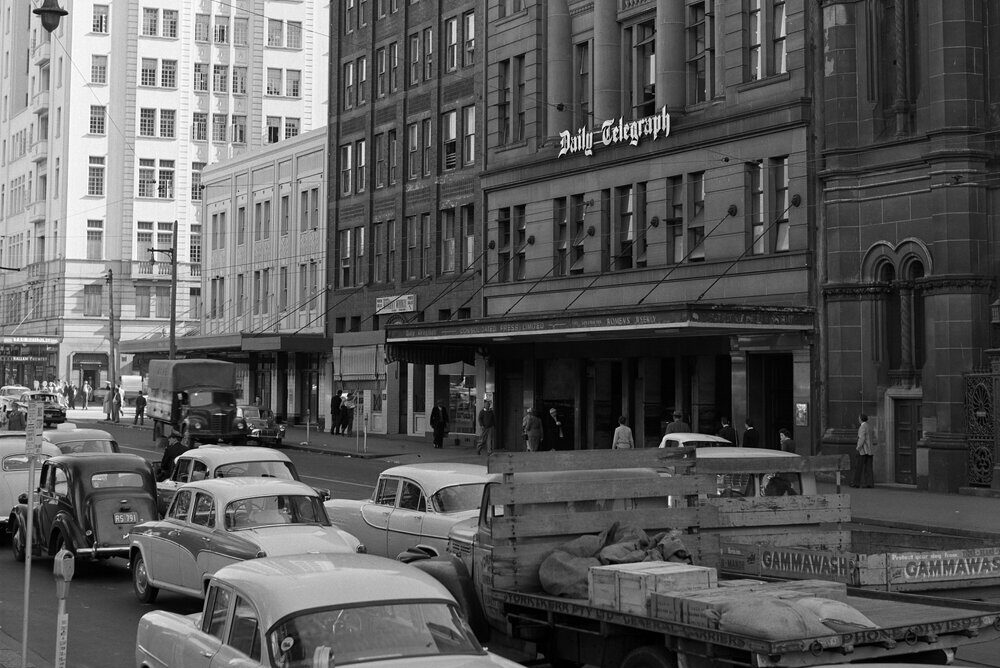
The Telegraph, under Frank Packer’s personal direction, then ran the story, but with blank spaces placed where the censor had cut out information. This was a threat to one of the censor’s most important powers – that of withholding the fact that censorship had ever taken place, and was a declaration of war on the power of the censor.
Events then escalated quickly. Calwell ordered that all copy from the Daily Telegraph be submitted to the censor on a daily basis before publication, and the placing of blank spaces was forbidden.
The other newspapers joined in the struggle and several confrontations occurred when the Commonwealth Police arrived to prevent the distribution of newspapers.
The Telegraph’s printing presses were shut down, although a small number of papers were produced in midnight printing runs at the old Labour Daily plant at the corner of Brisbane and Goulburn streets in Surry Hills.
Calwell became so infuriated that he ordered the Daily Telegraph and the Sydney Morning Herald off the streets altogether, followed soon after by the Melbourne Herald and the Adelaide News.
This precipitated street protests in which hundreds of university students marched through Sydney streets, converging on the censor’s office and demanding the reopening of the newspapers. There were minor clashes and a few arrests.
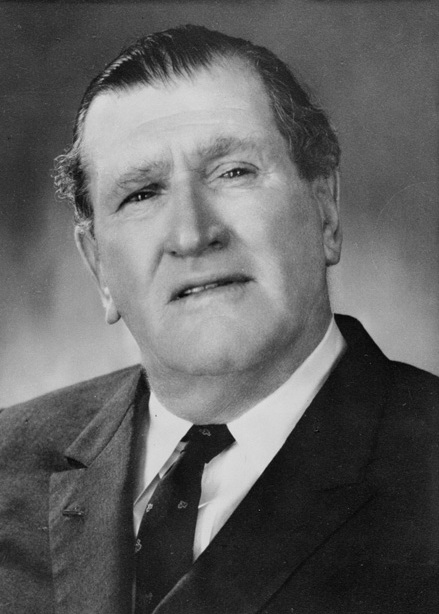
Frank Packer, a tough and pugnacious character, had not been idle. He convened a meeting of all the different newspaper heads in the Daily Telegraph boardroom at the Consolidated Press Building in Elizabeth Street, where it was decided to mount a High Court challenge to the rulings of the censor. The High Court quickly upheld this challenge and the papers were soon back on the streets.
A meeting of the full federal cabinet, which was about to issue a statement backing Calwell and denigrating the newspapers, was hurriedly called off when the High Court ruling came through. The crisis was over.
It was an awesome display of the power of the press, with the newspaper proprietors easily defeating an elected cabinet minister.
The lesson of this has not been lost on following generations of politicians, who now go to great lengths to ensure generally peaceful relationships with the media.
An army of PR staff and “spinmeisters” of all persuasions are employed to maintain this status quo, and it seems unlikely that such open warfare between government and press will ever occur again in Australia.
Since 1944 the media landscape has changed substantially, with the power of newspapers significantly eroded by the arrival of television in 1956 and then the birth of the internet giant during the 1990s. The internet has led to a great diversification, with “home publishing” flourishing and global distribution possible even by individuals operating on a shoestring budget.
Despite these fundamental changes it seems likely that there will always be a place for newspapers in the modern media, with artificial intelligence (AI) playing an increasing role in their production, distribution and consumption. As well as the old “hard copy” form of newspapers, online versions are increasingly popular enabling more frequent news updates to be initiated and also the ability to personalise news content.
Ross Fitzgerald AM is emeritus professor of history and politics at Griffith University. His most recent book is Chalk and Cheese: A Fabrication (Hybrid), co-authored with Ian McFadyen.
Dick Whitaker is a widely published author and lecturer in the fields of meteorology and Australian history.
News all day, every day at CityNewsQBN.com.au.




Leave a Reply