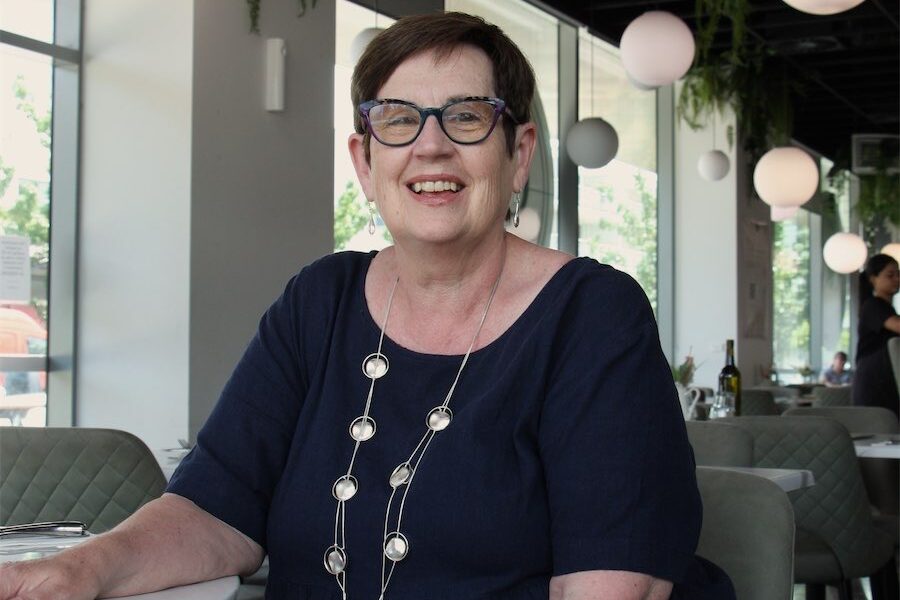
On Sundays – every Sunday for almost 30 years – Trish Carling spends her day volunteering at Clare Holland House, serving meals, assisting residents and providing companionship at the hospice.
Three years ago she extended her volunteering to also support the Motor Neurone Disease Clinic and Support Group.
Little wonder then that Trish, 62, has been named the 2025 ACT Volunteer of the Year for her service to the community by Volunteering ACT.
“I don’t do anything magic,” she says of her hospice work.
“I just do little things, such as bring them tea or a chocolate, or hand out flowers from my garden.
“Even after eating sticky toast and offering them a hot face washer, it can make such a huge difference.
“It’s amazing how little things can affect and improve a way of life.”
Often she’s asked how she’s able to work in such an environment.
“They’ll tell me, ‘isn’t it sad?’, and I say, ‘yes, it can be, but it’s incredibly fulfilling’ and I get a lot of joy out of it,” she says.
“We don’t talk about sickness. We laugh a lot and we talk about [patients’] interests and passions.”
From avid gardeners to puzzlers, Trish says it’s important to remember that people living with motor neurone disease (MND) and those who are living in hospice care can continue to be, and are, amazing individuals with lots to give.
“We are all alive until we are not,” she says.
“Volunteering at Clare Holland House and [MND support groups] is a privilege, and it’s my role to help acknowledge that the patients know they are still there, they’re still alive and they’re not reduced into thinking that they are a disease.”
Retiring from her full time job at Parliament House in Canberra three years ago as a senior research officer (where she had been for 40 years), Trish says her volunteering work was always a nice balance between the two.
“It’s a lovely community,” she says.
“From the nurses and staff to the patients, everyone is so welcoming and thoughtful.”
Suffering a big family loss in 1996, it was a newspaper advertisement that brought her attention to the work she would eventually dedicate her weekends to.
“They needed volunteers in hospice care,” she says.
“I had seen several people close to me in care and wanted to help.
“I’ve got a very large family and we cared for each other, but I couldn’t stop thinking about those who didn’t.”
Completing her training that year, Trish has consistently been a friendly face of Palliative Care ACT for those entering the Clare Holland House.
Her good deeds have not gone unnoticed by other volunteers, with one co-worker nominating her for the Senior Volunteer of the Year Award.
“I felt so relieved when my category came and went, and my name wasn’t called,” Trish says.
“I was so shocked when they called my name for the big award.
“It felt wrong to receive an award for something that I love doing.
“It’s really incredible, some of the work that is being done right now in care facilities,” she says.
“There were lots of young people doing amazing things there that are inspiring.”
Trish says death is a hard thing to come to terms with unless people are dealing with it directly.
“It’s a part of life,” she says.
“There’s a bit of stigma attached to healthcare in these residences, but there’s some amazing work being done.
News all day, every day at CityNewsQBN.com.au.




Leave a Reply