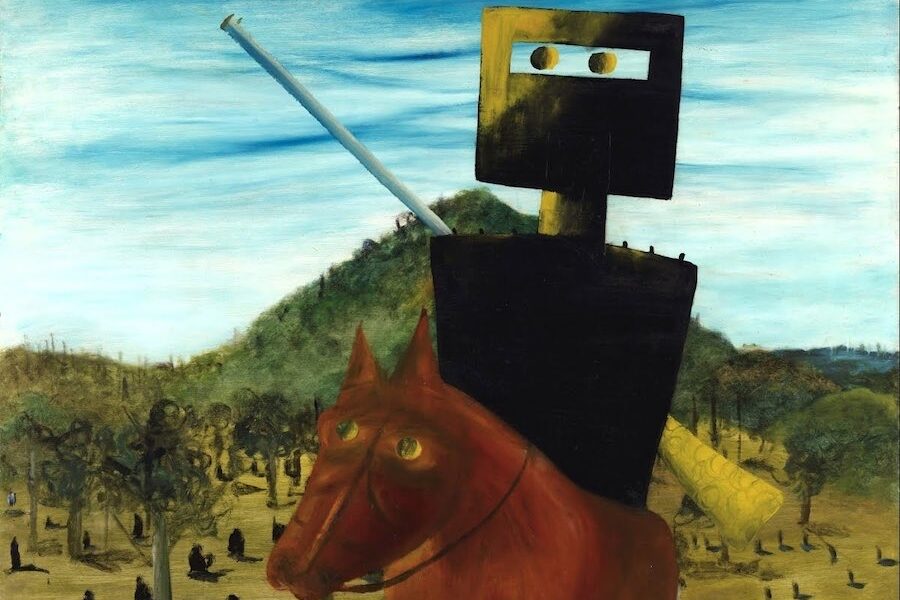
“Kelly himself is often quoted as saying,’Such is life’, just before he was hanged but this is debatable.” Historians ROSS FITZGERALD & DICK WHITAKER reflect on the endless legend that was Ned Kelly.
Ned Kelly’s celebrated Last Stand at Glenrowan in Victoria, occurred on June 28 1880.
Australia’s most famous bushranger was sentenced to death on October 29 1880, ending a long saga of lawlessness and murder that held much of Australia spellbound during the previous two years.
Opinion was and still is sharply split about Kelly and his gang. To many Australians he was a murdering horse thief but to others he was/is seen as a victim of police persecution (amid issues of conflict generated by land ownership and selection.
Those poorer selectors such as the Kellys were traditionally left to struggle with inferior land, while the wealthier often had access to superior blocks.
In addition, there were religious undertones, with the Kelly family – strong Catholics – believing that there was prejudice against them stemming from the “Protestant ascendancy” prevalent in Australia at the time.
A “Petition for Reprieve” of Ned’s death penalty was circulated before his execution and attracted some 30,000 signatures. It was organised by William Gaunson (Kelly’s defence attorney) and Gaunson’s brother David.
It stated: “Your humble Petitioners, having carefully considered the circumstances of the case respectfully pray that the life of the condemned man Edward Kelly may be spared”.
Indicating the depth of public feeling the situation generated at the time, it was presented to the Governor in Council on November 8. However the request was rejected and Kelly was hanged at the Old Melbourne Gaol on November 11 1880.
Edward (Ned) Kelly was born in December 1854 into a poor family of selectors in Beveridge, northern Victoria. His father John Kelly who hailed from County Tipperary in Ireland, was transported to Tasmania as a convict in 1842 for stealing two pigs. Kelly’s mother was Ellen Quinn from County Antrim in Northern Ireland and she arrived in Victoria with her parents around 1850.
John and Ellen had eight children with Ned being number three. The family of five sisters and three brothers, born between 1851 and 1865, moved around Victoria and leased several small holdings near developing rural towns including Beveridge, Avenal and Greta, near Wangaratta. These towns are well separated from each other with Beveridge further south than the other two.
Early criminal tendencies
Ned Kelly’s schooling was basic (today’s primary school level) but it appears that he could read and write.
Ned showed early criminal tendencies being charged with assault and robbery at age 14, and then robbery in company two years later. Further serious charges of horse-theft followed – together with a jail sentence of six months hard labour at Beechworth prison for assault and using indecent language to a lady.
After this his criminal career escalated rapidly, culminating with a charge of the attempted murder of Constable Alexander Fitzpatrick in April 1878.
Accounts of the Fitzpatrick affair differ markedly. Fitzpatrick testified that he attended the Kelly homestead to arrest Dan Kelly for horse theft. In the struggle that followed Fitzpatrick was shot in the wrist by Ned Kelly.
However, Ned Kelly’s account claimed that, after arriving at the homestead, Fitzpatrick attempted to assault Ned’s sister Kate and was shot by Ned in defence of his sister.
Kelly was indicted for attempted murder and escaped into the bush soon after, accompanied by his younger brother Dan.
Hiding out in the Wombat Ranges near Mansfield, they were joined by friends Joe Byrne and Steve Hart, all four being members of a local group of “bush larrikins” called the Greta Mob. But soon after the Fitzpatrick incident they became known as the Kelly Gang.
In October 1878 the gang ambushed a pursuing police party, and shot and killed three officers. After these murders they were declared outlaws by the Victorian Government and a sizeable reward (£2,000) was placed on their heads.
The gang responded with two large bank robberies, one at Euroa in the Goulburn Valley district of Victoria and the other at Jerilderie in the Riverina district of NSW.
It was here that Ned Kelly presented a lengthy document of 56 pages for publication. Explaining the reasons behind his actions, and dictated to Joe Byrne, this became known as the Jerilderie Letter.
In an insulting attack on the law, Ned called the Victorian police “a parcel of big, ugly fat-necked, wombat-headed, big-bellied, magpie-legged, narrow-hipped, splaw-footed sons of Irish bailiffs or English landlords”.
Following this and the two bank robberies, the reward for capturing the outlaws was greatly increased to £8000, an amount close to $5 million in today’s money.
Time finally ran out
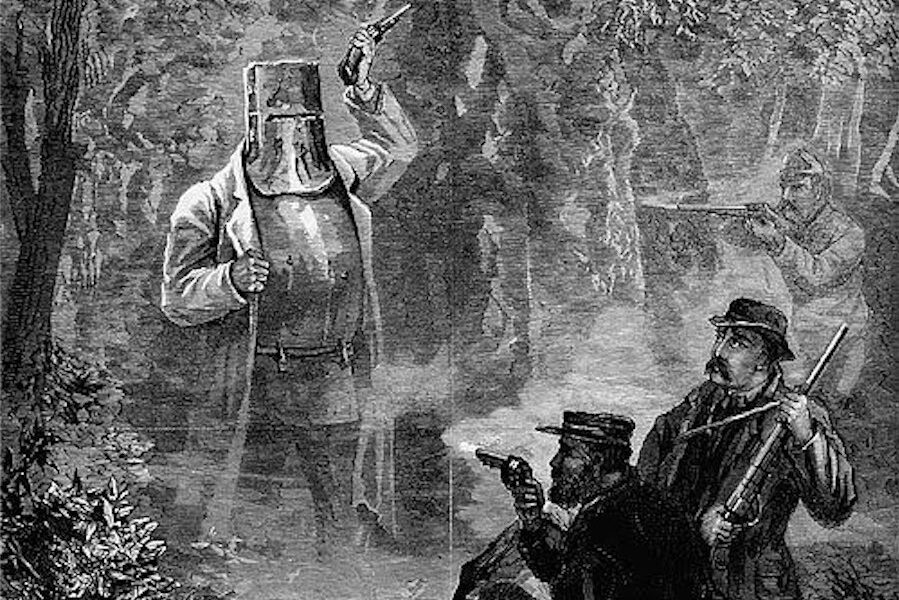
Time finally ran out for the Kelly gang on the morning of June 28 1880 when they were surrounded by a large police force at the Glenrowan Inn in northern Victoria. Ned achieved immortality when he attacked the police wearing armour made of iron plates and firing his revolver.
Realising that shooting at his armour was futile, the police used shotguns directed at his unprotected legs. This brought him down and he was captured soon after.
In the meantime Joe Byrne, Steve Hart and Ned’s brother Dan were shot and killed.
Following his sensational trial, he was sentenced to death on October 28 1880 and went to the gallows at Melbourne Gaol just 13 days later. His mother’s last words to him the night before his execution were supposedly: “Mind you die like a Kelly.”
Kelly himself is often quoted as saying “Such is life”, just before he was hanged but this, too, is debatable.
Story didn’t end at the gallows
The Ned Kelly story did not end at the gallows. Far from it.
Kelly was originally buried at the Old Melbourne Gaol in the “Old Men’s Yard,” a nickname for the plot of land where male prisoners were buried. It was just inside the front wall of the gaol and officially declared unconsecrated ground.
In 1929, the gaol was closed for partial demolition and the bodies of all the executed prisoners buried there were exhumed and reinterred in a mass grave inside Pentridge Prison.
Again this was not on consecrated ground. There were 30 such bodies and one of these was that of Ned Kelly. But it could not be determined which was the legendary outlaw.
Eighty years later, in 2009, the bodies were again exhumed to allow redevelopment of the Pentridge Prison complex. However, the graves were poorly marked. Again the question was “which one of these was Kelly’s”?
The Victorian Labor government, led by John Brumby, announced plans to identify the bodies and, where possible, return them to existing relatives. Naturally huge interest developed regarding Ned Kelly’s remains.
During an investigation by the Victorian Institute of Forensic medicine (VIFM) the skeleton of Ronald Ryan was found – the last prisoner executed in Australia (1967).
In another skeleton, shotgun pellets were located in a leg bone. These were almost certainly from Glenrowan. The DNA found within this skeleton matched that of a known living relative of Kelly – schoolteacher Leigh Olver – great grandson of Ned’s sister Kate.
Beginning in 2011 VIFM conducted a formal 20-month investigation involving DNA tests, CT scans, X-rays, pathology tests, odontology (dental tests) and anthropological analysis.
After this very thorough investigation experts agreed that the skeleton was that of Ned Kelly.
However the skull was missing and has never been located. It is believed that it was “souvenired” in 1929 when the executed prisoners were exhumed from the Old Melbourne Gaol. It is possible that Ned’s head was taken by a workman doing the digging, but nobody knows for sure.
Grave site remains unmarked
In 2012, the Victorian Liberal Party government led by Ted Baillieu issued a license for Kelly’s remains to be returned to the Kelly family, who made plans for his final interment. They arranged for his burial in consecrated ground at Greta Cemetery. Greta was Ned’s boyhood home from the age of 12 until the family left the area in 1878 when Kelly was 23 years of age.
Ned Kelly’s remains were buried on Sunday, January 20 2013 within Greta Cemetery. Numerous relatives were present. To prevent looting, the actual location of his grave site remains unmarked.
A fascinating footnote to the Kelly story is debate about whether or not Ned Kelly spoke with an Irish accent.
The fact is that he was very much raised in an Irish household and that, during his life, north-eastern Victoria was an Irish enclave. Although there is no direct record of his voice, by the mid-19th century, a distinct and unique Australian accent was emerging.
Hence rather than a strong Irish brogue, it seems to us likely that Ned Kelly had an Australian accent, but with some Irish tinges.
Ross Fitzgerald AM is Emeritus Professor of History and Politics at Griffith University. Dick Whitaker is a widely published author and lecturer in Australian history.
News all day, every day at CityNewsQBN.com.au.





Leave a Reply