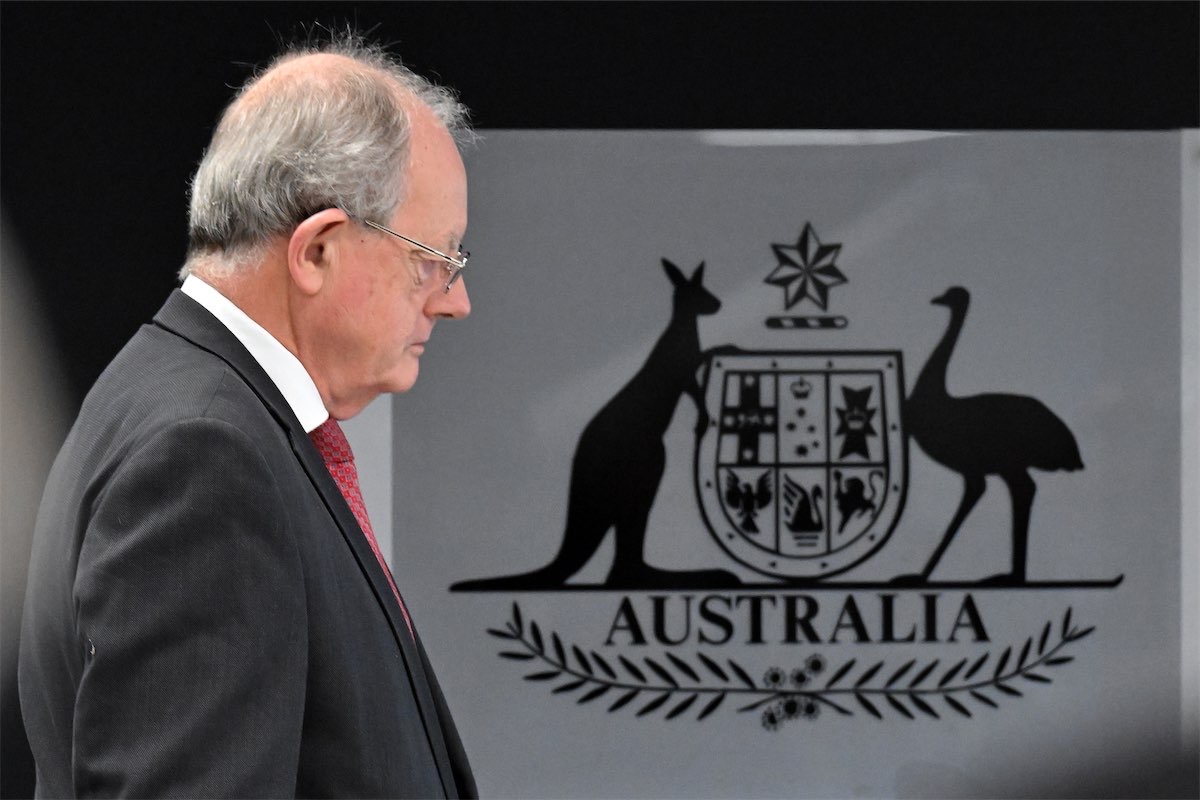
‘The excuse that his advice is so good that no one else can give it is, with respect, bordering on the pathetic.’ HUGH SELBY takes issue with National Anti-Corruption Commissioner Paul Brereton also providing ‘critical’ advice to the ADF.
Full-time employment has different guises. Workers who have a full-time job with a specified number of hours are free to seek additional jobs outside of those hours.

That’s common in the hospitality industry where the hourly rates are low and many workers need the extra income.
Even where the hours are not specified the employment contract for a full-time role can provide for the employee to earn extra income. An example was the once-upon-a-time 52-day rule that allowed academics at the ANU to earn extra income on one day a week, with that income going to the academic.
However, full-time employment means exactly what it says when the job pays a high salary because the office holder can be called upon at any time of the day or night to guide the organisation which they lead.
In such positions the taking of “external” roles is contrary both to the demands and the spirit of the full-time role.
It was reported by the Australian Financial Review in late 2024 that the now departed ANU Vice-Chancellor Distinguished Professor Genevieve Bell had an external, paid role with technology giant Intel.
This supplemented the around one million that she got with the ANU job. The AFR reported that Ms Bell received these payments until November 2024.
In January this year the ANU council, through its Chancellor Julie Bishop, issued a statement that includes the following: “We remain satisfied that Professor Bell’s role with Intel was appropriate given the limited nature of the role and remuneration, the due diligence undertaken, and her ongoing commitment to abide by the disclosure requirements.”
Don’t you choke when an official statement deliberately avoids recognising the elephant in the room and waxes lyrical on red herrings?
The obvious problem with Ms Bell’s continued, remunerative association with Intel was that it was an alluring distraction from the ANU job.
There may be times when it is possible for a leader to have occasional paid roles outside of the full-time job.
Such times do not include when there is a full-blown financial crisis and staff are being jettisoned, not because they were at fault, but because management stuffed up and intends to keep their jobs and salaries at the expense of innocent others.
To further demonstrate that “moonlighting” has its limits, consider these two examples.
The position of solicitor-general is a highly paid legal advising job to government. The holders are expected to be top legal minds, able to give excellent legal advice on complex issues in short timeframes.
The notion that a solicitor-general could hold down a side hustle as an occasional consultant to a corporation is anathema.
The second example is that of a director of public prosecutions. The idea that the holder of that position could offer paid advice to defence lawyers, whether in their own jurisdiction or another, is absurd.
The problem in both cases is not limited to “conflict of interest”. It goes further by damaging the public perception of the role held by the office holder. Leadership, focus, independence, commitment are all compromised.
When ‘integrity’ and ‘anti-corruption’ are compromised
Until our integrity commissioner joined with the Legislative Assembly to argue that the commission’s reports were beyond judicial review because of “Parliamentary Immunity”, the notion that a body headed by a former Supreme Court judge would make such a claim seemed impossible.
It was not a coat-tails argument. The commission actively endorsed the pro-immunity arguments when it might have taken the position of either opposing the claim, or offering no view. (see Cover v ACT Integrity Commission (No 3). How could anyone not understand that there can be no integrity without transparency?
Sadly, our integrity commission is not alone. The ABC has reported: “The National Anti-Corruption Commission (NACC) chief commissioner, Paul Brereton, has continued providing ‘critical’ capability to the inspector-general of the Australian Defence Force (IGADF) while leading the federal watchdog, despite previous assurances he had stepped away.”
The proffered excuse is: “This assistance has been infrequent, and is necessary given his extensive knowledge of and expertise in the specific inquiry subject matter.”
Mirroring the ANU council’s defence of the vice-chancellor having more than one paymaster, the NACC has said, in effect: “All is well. Nothing to see here, other than how much in demand our leader is”.
The excuse that his advice is so good that no one else can give it is, with respect, bordering on the pathetic.
We are, every one of us, replaceable in the twinkling of an eye. He is 68 years old and there is a lot of military law talent that is years younger than that.
The suggestion that there is some gap in knowledge that only he can fill is an attempt to pull the wool over our collective eyes.
The commissioner has led the NACC for several years. The most notable events in that history have been the failure to follow through on Robodebt, the failure to follow through on the payout to Ms Higgins, the failure to distance himself from the decision about Robodebt, and now this latest irregularity for which the official explanation is far too thin.
Paid around $750,000 the commissioner’s sole focus should be making the NACC a success.
Former barrister Hugh Selby is a CityNews columnist, principally focused on legal affairs.
News all day, every day at CityNewsQBN.com.au.





Leave a Reply