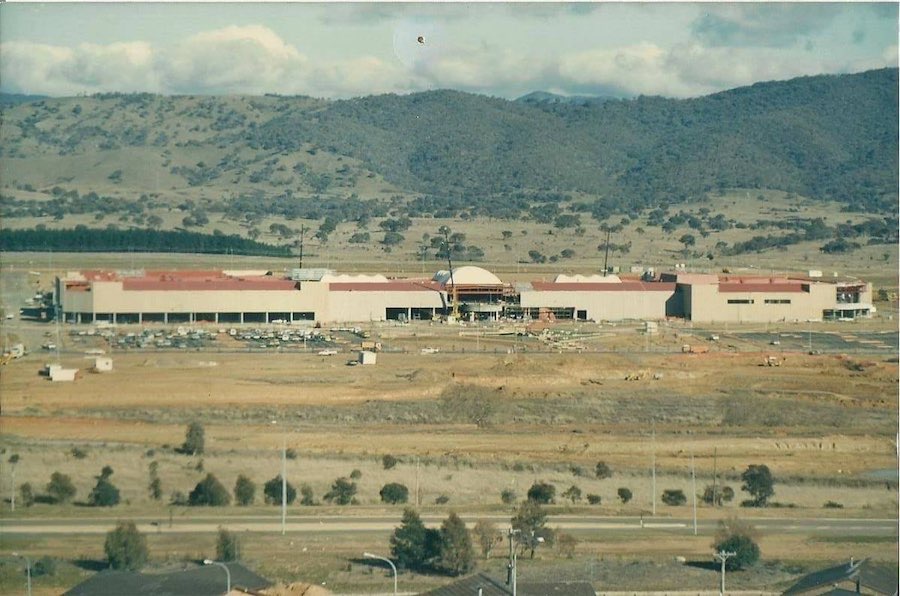
“Additional employment and improved transport connections would increase the demand for housing in Tuggeranong,” writes planning columnist MIKE QUIRK.
Is Tuggeranong’s development framework effectively addressing the needs of residents or are the claims of ACT government neglect valid? Firstly, some background.

Settlement of Tuggeranong began in 1974 when its initial forecast population capacity was 170,000, including 40,000 in west Murrumbidgee.
By 1984, the estimate had been reduced to 90,000 with development of west Murrumbidgee and in south Lanyon curtailed due to environmental, heritage and infrastructure cost concerns and changing demographic and housing demands.
By 1996, major suburban land release was complete and its population was more than 91,000. By 2016, ageing in the earlier settled suburbs had led to a decline in population to 85,200, which contributed to the closure of several schools and an increased demand for services and facilities for older residents.
In 2024 the ABS estimated the Tuggeranong population had increased to 89,300. Since 2015, the population of the district has increased by 2958. Suburbs to have experienced growth were the town centre (3488), Kambah (598), Monash (109), Wanniassa (91) and Gordon (84). Small declines were experienced elsewhere through ageing.
Future projected population growth: is based on assumptions about the level of development and redevelopment likely and demographic change. The recently released 2025 Projections project a 2045 population of 101,500.
The 2025 Projection, through “dynamic modelling’’, is said to better incorporate suburb level migration, ageing and infill than the 2022 Projection that had projected a 2045 population of 87,500.
The increase in projected population should result in increased infrastructure funding. While the methodology of the 2025 Projections is an improvement, it requires further work as the level of growth projected by suburb is questionable.
For example, the population increase projected between 2025 and 2045 in the small suburbs of Oxley (649 dwellings in 2021) and Macarthur (501 dwellings in 2021) is 531 and 452 persons respectively. This compares to the projected increases in Kambah (6334 dwellings in 2021; population increase 115) and Wanniassa (3127 dwellings in 2021, population increase 412).
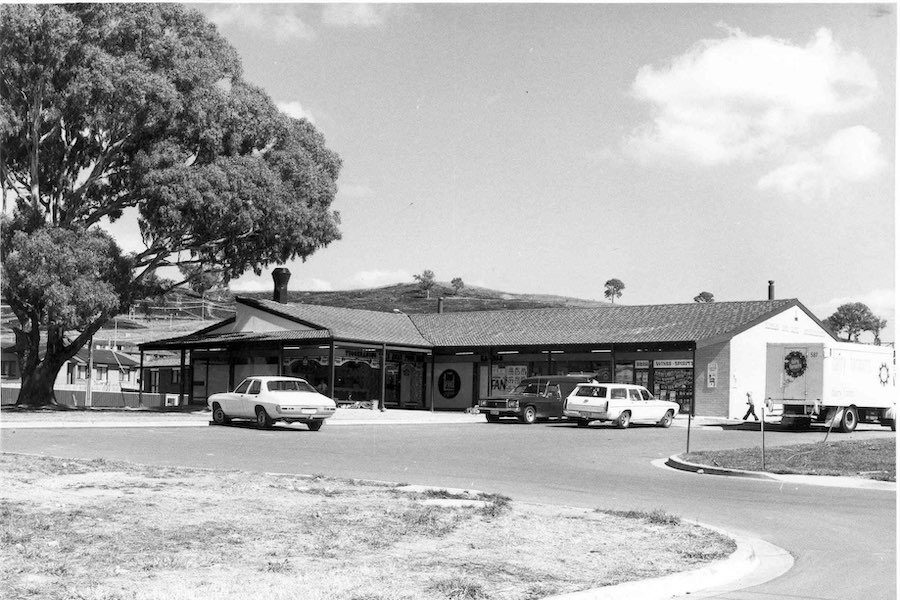
As the District Strategy observes Tuggeranong has many attributes including views of the Brindabellas, proximity to rural areas, recreational opportunities provided by Lake Tuggeranong and along the Murrumbidgee River and the quality of the district’s planning, which includes significant town centre employment, the proximity of homes to centres, schools and quality transport, pedestrian, cycle and open-space networks.
The environment could become increasingly attractive to those seeking more affordable and appropriate housing and who do not wish/need (through the ability to work from home) to live in an increasingly congested inner city.
The government’s proposed “missing middle” reforms, particularly subdivision in the low-density RZ1 areas, should provide a modest stimulus to redevelopment. Increasing the block consolidation provisions, government involvement in block amalgamation and redevelopment of Housing ACT sites to higher density, as has occurred in Kambah, would further stimulate activity.
Infrastructure needs: Population growth could be accommodated more cost-effectively than elsewhere due to spare capacity in the District’s social and physical infrastructure. Additional infrastructure expenditure is required to upgrade and replace ageing infrastructure and to respond to the needs of a changing population. Growth would support existing centres and improve the utilisation of recreation and community facilities including schools.
Employment and Transport: Additional employment and improved transport connections would increase the demand for housing in Tuggeranong. The creation of an ACT government employment hub should be pursued and every effort made to maintain or increase employment at the town centre.
The identified light rail route along Athllon Drive does not serve the majority of the District’s population. Its construction would require significant reconstruction of the $100 million road duplication expected to commence in 2026.
A review of transport requirements is needed given changing transport demands from demographic changes, increased working from home and emerging autonomous vehicle technology. In this context, the uber-expensive light rail is a high-risk strategy that could divert limited resources from other projects.
A more effective strategy could be to enhance the existing R4 and R5 bus services and the frequency and coverage of the bus network including the provision of an eastern rapid service. Redevelopment, particularly at centres along bus routes, could result in more redevelopment than that generated along the light rail route. The extension of light rail from Civic to Woden, by increasing travel times, could hinder redevelopment in Tuggeranong.
A Strategy and Development Plan (SADP) independently prepared and endorsed by the Assembly is needed to guide future development in the District.
Updating and providing more direction than the District Strategy, it would include the facilitation of Tuggeranong as a residential and employment location; identify infrastructure provision/upgrading priorities and their timing; centre renewal actions; the continuation of strategies to improve the water quality in Lake Tuggeranong and investigate the scope for development in West Murrumbidgee by considering environmental, travel and infrastructure costs; fire risk and possible benefits for the town centre and housing supply and affordability.
The Tuggeranong SADP should be a component of a review of Canberra’s planning and transport strategies with the objectives of effectively managing growth and change and the transparent justification of infrastructure priorities.
Mike Quirk is a former NCDC and ACT government planner.
News all day, every day at CityNewsQBN.com.au.





Leave a Reply