“Independents are rarely actually ‘independent’. They may be independent from political parties. However, they are dependent on others for assisting them to form policies.” Political columnist MICHAEL MOORE says party names are not always a guide to the way they behave.
Republicans are not republicans and Liberals are not liberals. Political discourse has distorted these important concepts to such an extent that they are unrecognisable.

It is a similar story, although less stridently so, with Democrats, Labor and independents.
Political philosopher Philip Pettit considers that both republicanism and liberalism are different forms of expression of freedom.
The ANU and Princeton academic argues that republicanism is identified by its characteristic of “non-domination”. He sees liberalism as being characteristically a philosophy of “non-interference”.
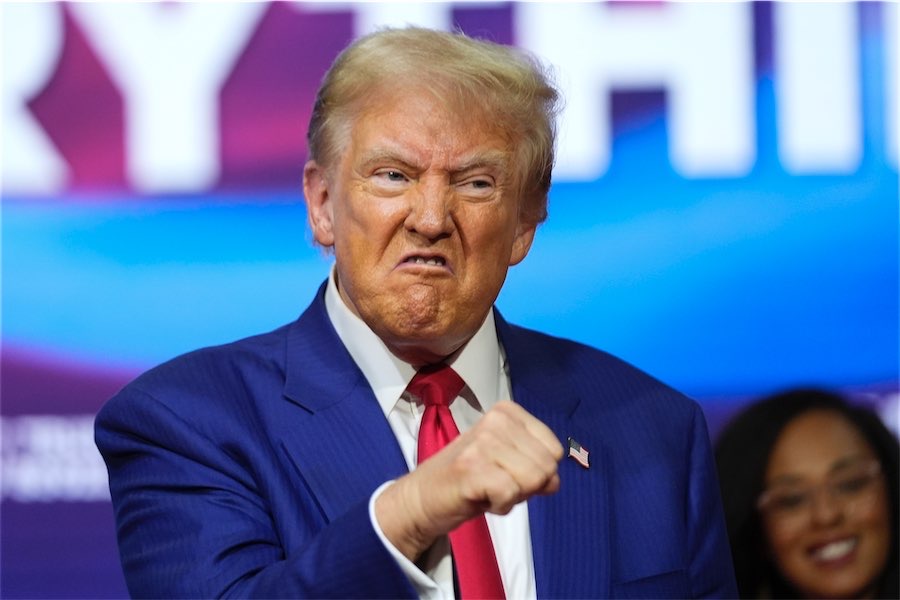
The American Republican Party practices anything but “non-domination”. The policies interfere with such aspects of life as a woman’s right over her own body. As the recently deceased Charlie Kirk pointed out, transgender is a dirty word. President Trump’s constant attacks on people who disagree with him illustrates his willingness to dominate.
Republicans in the US are now working harder than ever to form a dominant government. The treatment of media personalities such as Jimmy Kimmel and Australian journalist John Lyons illustrates a complete misunderstanding of republicanism theory.
Does Trump misunderstand? Or are his actions in deliberate conflict? As many commentators identify, the commencement of his second term marked the shift towards authoritarianism. Ironically, most of those who call themselves Republicans seem to ignore both this shift and the real meaning of the term.
Trump simply hates liberals. He recently stated: “I hate my opponents, and I don’t want the best for them.” This followed days and weeks of blaming “liberals” and “the left” for the killing of Kirk and for constant political violence.
This is also ironic, as so much political violence in the US is associated with the hard right and their commitment to the Second Amendment to protect their guns.
As professors Jipson and Becker point out in The Conversation: “Based on our own research and a review of related work, we can confidently say that most domestic terrorists in the US are politically on the right, and right-wing attacks account for the vast majority of fatalities from domestic terrorism.”
The American Republicans are currently also demanding a largely Christian society. This is in marked contrast to the actions of President George W Bush following the 9/11 attacks on the Twin Towers in New York. Bush went out of his way to be seen embracing Muslim leaders. The conservative American Christians are also embracing Israel as “God’s chosen people”.
This helps explain the letter from American Republicans asserting the likelihood of “punitive actions” on Australian recognition of Palestine. It also highlights the strange and damaging approach of Opposition Leader Sussan Ley, responding by promising to rescind the recognition of Israel.
It is ironic that Trump hates “liberals”. Liberal philosophy is framed in non-interference. The liberals in the US and the Liberal Party in Australia will argue non-interference when it comes to business and the free market. However, it is a different story over moral questions.
The Liberal/National government in Queensland, for example, has just pushed through legislation banning all forms of pill testing for illicit drugs. It wants to be tough on drugs. However, a true “liberal” philosophy would mean not interfering in the efforts of health professionals to save lives.
Australian Liberals are not liberals. Although there are some liberals within the Liberal Party, these are a dying breed. A more accurate discourse would be to describe the current Liberal Party as the Conservative Party.
It is not so different regarding the Labor Party. Although they do work to protect workers in many ways, recent budgets have told a story of a party attempting to be much broader. A more accurate discourse would identify them as a “progressive” party.
Independents are rarely actually “independent”. They may be independent from political parties. However, they are dependent on others for assisting them to form policies. They are dependent on the supporters who help them get elected. It is through their supporters that their policies are derived. Most argue their advantage is they can vote as they see issues without being committed to policies demanded by a political party.
Political discourse tends to present ideas in black and white. In doing so, it can be divisive and sow discord. However, some clearer understanding of basic philosophical concepts could play a key role in bringing people together and improving democracies internationally.
Michael Moore is a former member of the ACT Legislative Assembly and an independent minister for health. He has been a political columnist with “CityNews” since 2006.
News all day, every day at CityNewsQBN.com.au.


Leave a Reply