“A further six affected properties have been identified since the closure of the scheme, which raises the question: how many more affected houses are still out there?” JON STANHOPE & KHALID AHMED look at the failed asbestos taskforce.
The Asbestos Response Taskforce’s original financial premises were unfair, its treatment of “Mr Fluffy” homeowners was unfair, and the outcomes for homeowners were unfair.
In looking at how we get to that conclusion, there are a couple of key questions: what were the outcomes of the program? And what went wrong?
In our last column (“Government waits for the ‘Mr Fluffy’ holdouts to die”, CN September 11) we revealed the callous design of the “voluntary” buyback scheme developed for the 2014 asbestos removal program.
We exposed the range of flaws that would render any program dealing with citizens unfair and, indeed, unacceptable under any circumstances, but more so when the program is targeted at a vulnerable cohort within the community.
Earlier (in “Surrender home of be harassed to your graves”, CN September 4), we also revealed the unprofessional behaviour of the Taskforce in dealing with affected homeowners and the very high level of dissatisfaction with all facets of the program.
Shifting principles and objectives of the program
The authorisation of funding, by the Legislative Assembly, in 2014 included guiding principles relating to (a) elimination of risk of exposure by demolition; (b) providing a fair outcome and ability to retain ownership; (c) flexibility and ability to make informed choices; and (d) minimise overall net costs to the community.
The full text of each principle can be found in the Loose-fill Asbestos Insulation Eradication Act 2014-2015, or in our article “Dead end future for ‘Mr Fluffy’ people who said no” (CN August 21).
The Taskforce adopted, quite appropriately, those guiding principles as the objectives of the scheme.
Obviously, any reasonable assessment of the program and its outcomes would be against those guiding principles and objectives of the program/scheme through a set of relevant and appropriate measures.
The Taskforce’s Final Closure Report purports to report on the delivery outcomes. Those, however, relate to its administrative processes, for example, buyback, demolition and sales through measures of its activity rather than the actual outcomes for the community or against the objectives of the program.
The Taskforce failed to abide by the principles set by the Legislative Assembly and deliver on the objectives it adopted.
It was required to identify contaminated properties; decant, demolish and clean the blocks, while treating the owners fairly, and allowing them to return to their land/community, while minimising costs.
But the Taskforce approached and defined its task differently, changing some principles and redefining others.
Principle/Objective 1: Eliminate risk of exposure
Appropriation Act: “Eliminate, by demolishing all known affected houses, the ongoing risk of exposure to loose-fill asbestos insulation for home owners, tenants, tradespeople and the wider community.”
Reporting on this objective should be relatively simple, ie, number of affected houses identified, number demolished and cleaned, and an explanation if there are any outstanding. However, this information is not readily available in the Taskforce’s report.
Based on the available information, 1048 houses were identified as affected of which 1020 properties have been remediated. At least 17 – possibly more – were not demolished and not remediated due to the affected owners not accepting the price offered. It appears two of those have since been surrendered by their respective estates.
The Taskforce did not accomplish its main objective of eliminating risk of exposure from all known affected houses. This was because of a fundamental design fault in its scheme.
From media reports it appears that a further six affected properties have been identified since the closure of the scheme. This is likely due to deficiencies in identification protocols or in inspections, which raises the question: how many more affected houses are still out there?
The Taskforce is clearly not in a position to categorically guarantee the Canberra community that the risk of exposure has been eliminated and that Mr Fluffy is behind us. Another fail.
Principle/Objective 2: Fair outcome and ability to retain ownership
Appropriation Act: “Provide, so far as is possible and reasonable, a fair outcome for owners of affected homes, including the ability for affected home owners to retain ownership of their land”
The ability of affected home owners to retain ownership of their land was mysteriously missing in a key document released to the community titled “The ACT Government’s Preferred Way Forward on Loose Fill Asbestos” leaving the following truncated objective:
ACT government’s Preferred Way Forward: “To provide a fair outcome for owners of affected homes”
This advice to the community could not be a mere editing oversight, noting the Taskforce’s approach and the outcomes.
Of the 991 blocks of land acquired from owners, 976 were sold as at the time of the Closure report, of which just 48 (4.8 per cent) were repurchased by their original owners. Table 1 provides a summary of outcomes regarding retention of ownership deduced from information in the Taskforce report.
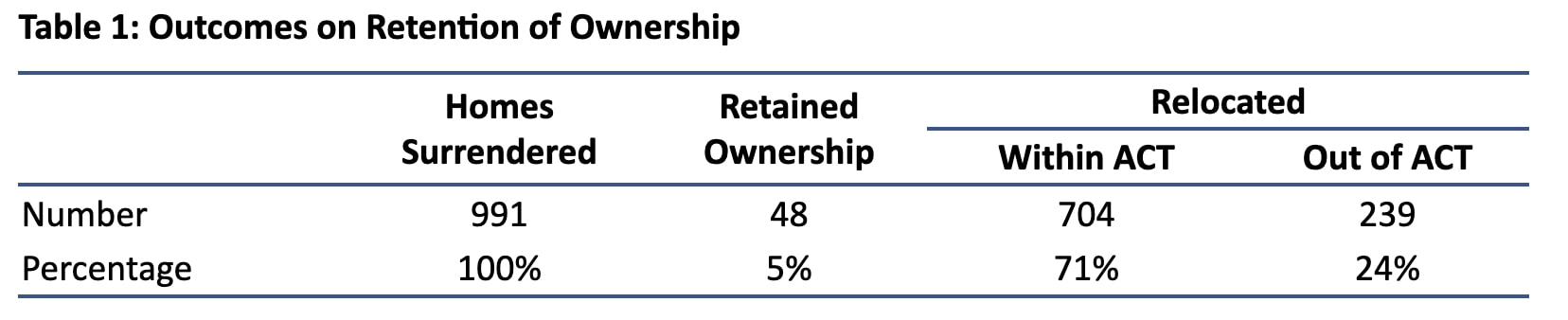
We do not know with certainty whether around a quarter of the people really wanted to move out of the ACT or if just 5 per cent wanted to retain ownership. The government could, of course, have discovered the answer to this question with a simple survey.
However, the Taskforce did not develop any rubric to be cognisant of homeowners’ circumstances and their plans for the future. The demographic and age profile of homeowners and their preferences at the time of the news that their homes were uninhabitable did not factor into the Taskforce’s methodology or its calculus – its report is silent on these questions.
From the comments in the Community and Expert Reference Group (CERG) Report, it is clear that many of the affected home owners wanted to retain ownership of their blocks and return to their communities.
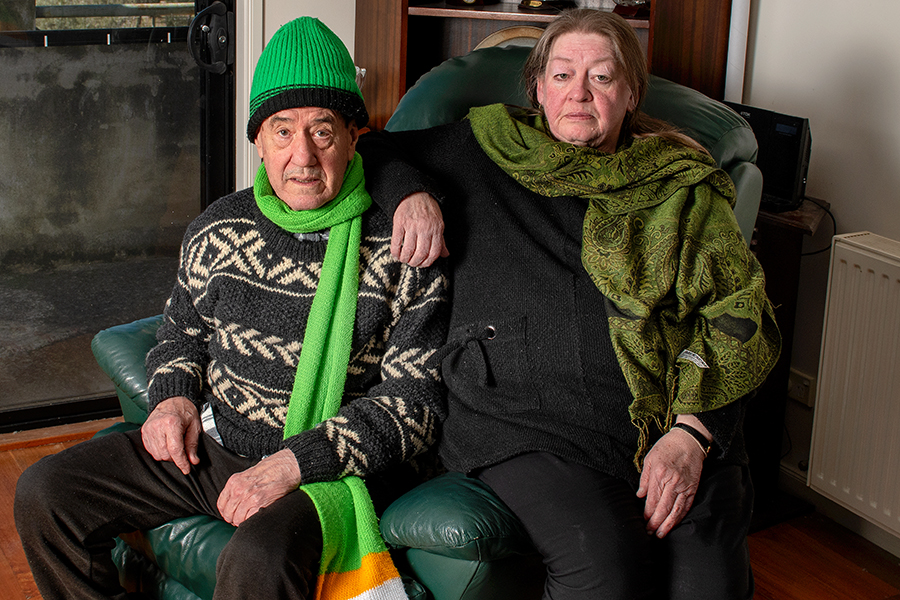
Around half were seniors, many of whom – like the Carvalhos, of Lyons – wanted to age in place in their forever home. There were young families hoping to raise their children in their local communities. This does not appear, however, to have interested the Taskforce.
The financial design of the scheme was a significant factor in the dislocation of more than 95 per cent of the families. The modelling provided to the Standing Committee by then-treasurer Andrew Barr in November 2014 reflected a 22 per cent increase in land values (ie, offer price for purchase back) on average.
In other words, the government planned to charge more for the blocks being returned to homeowners than it had paid them – the households were in effect subsidising the cost of cleanup/administration of the scheme.
We find it difficult to articulate how this could in any circumstance be deemed fair or reasonable. Table 2 highlights the assumed amounts paid to homeowners and the sale-back offer prices.
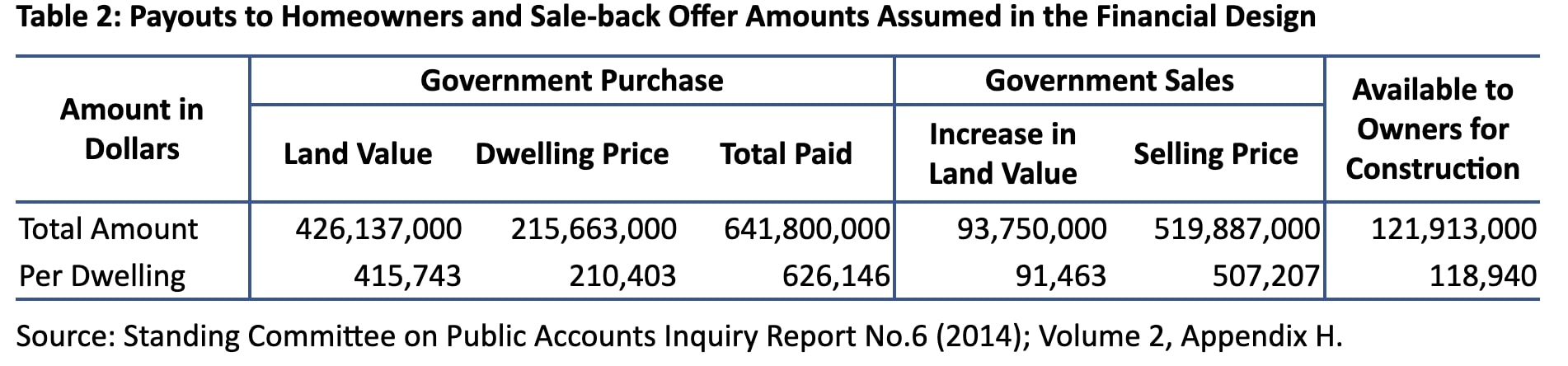
Having been paid a mere $210,000 for the dwelling (excluding land) – a low amount for replacement dwelling – the homeowners were left with just $119,000 on average with which to construct a house. These were the assumptions underpinning the design. Their choices were to either take a mortgage or downsize to another suburb or move interstate.
The actual financial outcomes were, in reality, much worse with one affected homeowner declaring in the CERG Report: “We got $400,000 for our block plus some for our home. A year later they came back and told us that we could buy our block for $900,000!”
The Taskforce’s original financial premises were unfair, its treatment of homeowners was unfair, and the outcomes for homeowners were unfair. A massive “Fail” on any measure.
We will discuss outcomes against the remaining two objectives in a further article.
Jon Stanhope is a former chief minister of the ACT and Dr Khalid Ahmed a former senior ACT Treasury official.
News all day, every day at CityNewsQBN.com.au.



Leave a Reply