
In his series of stories of remarkable Canberrans, DAVID TURNBULL meets Elizabeth Reid, who in 1973, as a 31-year-old arts graduate from Taree, became the world’s first adviser on women’s affairs to a head of government.
When I walk into the foyer of the retirement village, Elizabeth Reid is edging towards me in a walking frame.
At 83, and encumbered with Parkinson’s disease, she is slow and deliberate with her steps and looks just like any of the other occupants.
They all have stories, of course, but this woman is different.
Elizabeth Reid is a genuine trailblazer.
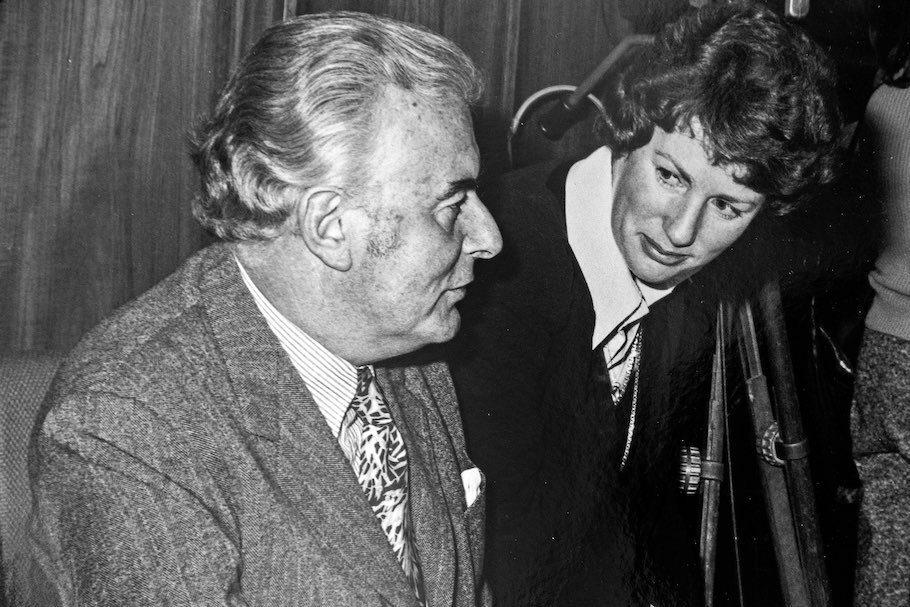
In 1973, the then 31-year-old arts graduate from Taree became the world’s first adviser on women’s affairs to a head of government.
PM Gough Whitlam wanted Elizabeth to help him revolutionise the treatment of women.
“In those days, the entire weight of society – the church, corporations, government and even the attitudes of people in the street – combined to suppress women,” Elizabeth says.
“’Remember, man was the ‘breadwinner’ and ‘the woman’s place was in the home’. To question that was heresy.”
Elizabeth believes Whitlam was decades ahead of his time because he grew up with strong women.
“He had a strong mother, a strong sister, and then married a strong, independent woman in Margaret, and they had a strong daughter.
“He got it, Gough, way back then, he recognised Australia needed to change its attitude to women and our attitude to Aboriginal people.”
It’s important to remember that when Whitlam hired Elizabeth Reid, the Labor Party did not have a women’s policy in its platform.
Even the platform for the “It’s Time” election in 1972 only contained vague hints on the groundswell of change that was coming – a promise to lift the sales tax on the contraceptive pill, and a commitment to two days of pre-school for children.
Elizabeth spent the first nine months getting to know Australian women. She visited churches and prisons, full-time mothers, teachers, doctors, businesswomen, farmers, migrant women and indigenous women around campfires always listening.
“As you see in the street, women are very different, some want to be stay-at-home mothers, others want a career, or the chance to balance work with a family.
“There wasn’t one single list of issues.”
The first serious contribution to policy Elizabeth made came in the lead up to the 1974 election.
“Before leaving the office to go and write his speech for the upcoming election, Gough told us he was going to keep the platform from ‘72 unchanged,” she says.
“He left and I couldn’t reach him.
“In an extraordinary coincidence, a few days later I was on a beach near Cairns, and this colossus emerged from the ocean. It was Gough, and I ran up to him.
“Boss, boss you’ve got to change one thing in the platform. Two-days of pre-school discriminates against the poor, what women need is community-based childcare.”
The next step came when Whitlam asked the Conciliation and Arbitration Commission to re-open the wage case to address the question of equal pay for work of equal value.
Dominant male order rocked to its foundations
And then the dominant male order was rocked to its foundations, he established a Royal Commission into Human Relationships.
Chaired by reformist lawyer and jurist Elizabeth Evatt, the royal commission brought the secrets of private homes and the business world into the open. The discrimination, and domestic violence, the child abuse. The failures in education, the glass ceiling that kept capable women in junior ranks, and the toxic chauvinism simply could no longer be ignored.
There were 1200 written submissions with hundreds of oral testimonies at public hearings in Sydney, Melbourne, Canberra, Adelaide, Brisbane, Perth, Bunbury and Hobart.
This was the only all-encompassing inquiry into relationships ever conducted by a government anywhere, and it spawned research reports on medical education, abortion, attitudes toward sexuality, rape, disability, domestic violence, child abuse and the needs and concerns of migrant women.
Providing women with a safe space to speak
To Elizabeth Reid, though, its greatest achievement was simply providing women with a safe space to speak.
Her voice quivers with emotion when she recalls women who’d suffered in the isolation of bad marriages courageously sharing their stories.
Significantly, the Evatt Royal Commission recommended abortion should remain within the jurisdiction of the states, but it suggested abortions up to 22 weeks should be decriminalised.
Whitlam had indeed started a revolution, and there was no going back.
By 1980, Australia had signed the Convention on the Elimination of All Forms of Discrimination against Women adopted by the United Nations.
By late 1974, Elizabeth began to look beyond Australia’s shores.
She was the Australian representative to the United Nations Forum on the Role of Women in Population and Development, and she also led the Australian delegation to the World Conference of the International Women’s Year in Mexico city.
Just before the dismissal in 1975, she fled Australia “feeling like a political refugee”.
“During my time with Gough, I would receive thousands of letters a day, all attacking me in the most threatening way,” she says.
“The church, of course, was aghast even talking about homosexuality or abortion, let alone domestic violence or child abuse and the male-dominated media demonised me at every opportunity.
“People always focus on my time with Gough, as if it defines me, but that was only the beginning.”

A career with the United Nations
After leaving Australia, Elizabeth found herself working for Princess Ashraf Pahlavi, the twin sister of the Shah, in Iran.
“She wanted help implementing the reforms the world conference on women adopted in Mexico.”
After that she began what became a 30-year career with the United Nations in international development and women’s rights in Asia, Africa, the Pacific, the Middle East, the Caribbean, Central America, Eastern Europe and the Commonwealth of Independent States.
She was the founding director of the United Nations Asian and Pacific Centre for Women and Development in Tehran from 1977 to 1979.
She was the director and policy adviser of the UN Development Program from 1989 to 1998.
Her passion to help women, and underprivileged people in the third world never wavered.
Along the way she married for a second time to an American named Bill Pruitt. When he was appointed head of the peace corps in Zaire, now the Democratic Republic of Congo, the newlyweds lived in Africa from 1980 to 1986.
Bill suffered from haemophilia. and had numerous blood transfusions.
Tragically, he contracted HIV AIDS from those transfusions and became the first person to die of HIV in Canberra.
“At that time medicine did not know what caused HIV, or how to treat it. The media was full of misinformation, and sensational scare campaigns that demonised the homosexual community.
“It was just terrible.”
As always, Elizabeth wanted to help. Health Minister Neal Blewett appointed her to develop Australia’s first national strategy on HIV AIDS.
Her first step?
A green paper to educate the community and counter ill-informed hysteria.
And that strategy gives us a great insight into the wisdom Elizabeth Reid has gained from her lifelong exposure to cultures from all over the planet.
‘It is the people themselves who make the change’
“You cannot impose fundamental change in any society from outside. It is the people themselves who make the change.
“All you can do is start the conversation, provide an opportunity for people to share ideas.
“As the facilitator of change, you provide a safe space where community conversations can take place.
“And you must be patient.
“Real change does not come easily: It will grow, stop, go backwards, and flourish again.
“You can’t lose faith. You simply must go the distance.”
Elizabeth Reid has never taken a job for the money or power.
She’s always had a simple desire to help people improve their lives.
“It’s not equality that women or the underprivileged want,” she says. “It is respect, respect for whatever they want to be.”
Journalist David Turnbull is writing a series of profiles about interesting Canberrans. Do you know someone we’ve never heard of? Share the name in an email to David via editor@citynews.com.au
News all day, every day at CityNewsQBN.com.au.



Leave a Reply