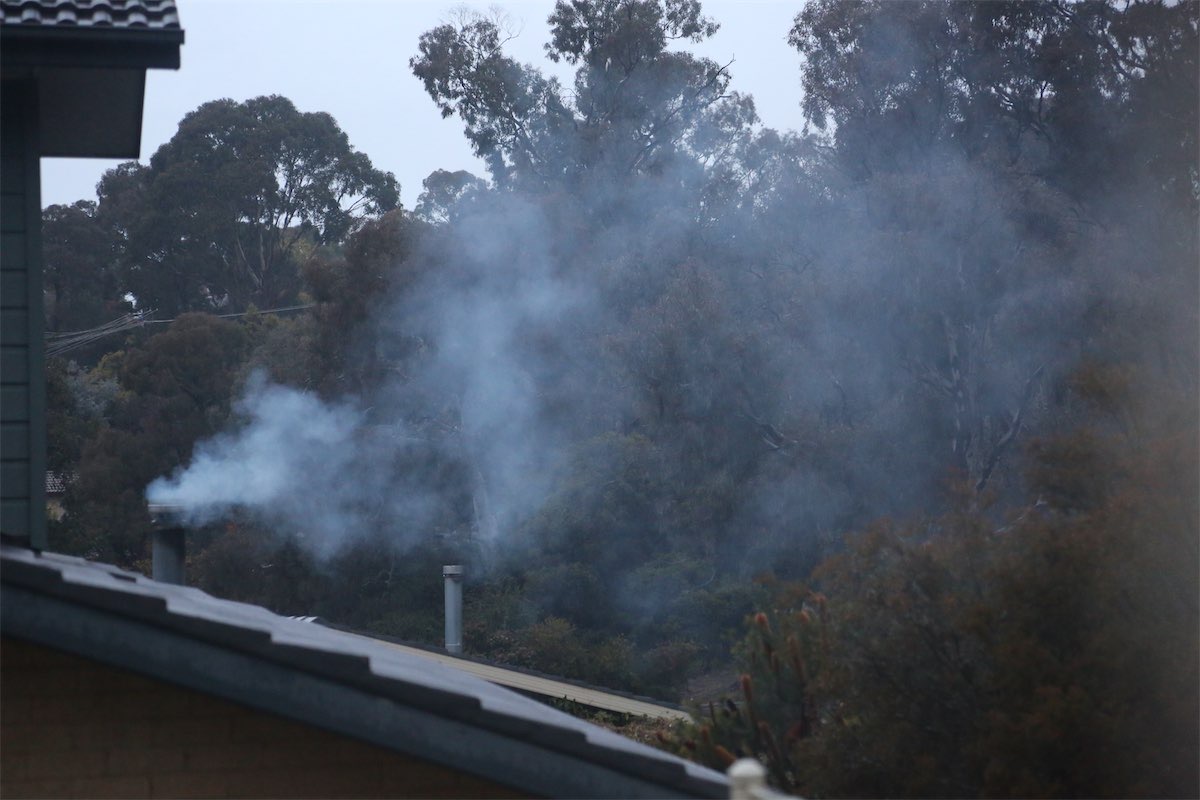
Letter writer DARRYL JOHNSTON, of Tuggeranong, is disappointed the Queanbeyan Palerang Regional Council has backflipped on its policy to strict wood-fired heaters.
It is regrettable Queanbeyan Palerang Regional Council (QPRC) has submitted to pressure and backed down on its policy to restrict and regulate wood heaters that produce toxic wood smoke pollution in urban areas.
Multiple studies show the health costs are in the order of hundreds of millions of dollars, or at least $4000 per year for each wood heater.
QPRC is not the only local or state government to come under an orchestrated attack when their only objective is to protect the health of their residents and the local environment.
Doctors, scientists and other health experts attempting to raise awareness about the impacts of residential wood smoke pollution have likened these campaigns against any moves to ban, restrict or regulate them to those of the tobacco industry.
For decades big tobacco denied any link between tobacco consumption and serious health issues. We know better now and in response we have introduced tough legislation to protect ourselves from second-hand tobacco smoke.
So why do our legislators continue to ignore and fail to act on the same damning evidence and advice when it comes to smoke from wood heaters?
Darryl Johnston, Tuggeranong
Call for Page 3 girls and mullet kids
How brave of Barry Peffer (letters, CN May 15) for indirectly suggesting our editor be more prudent when printing so many political content letters.
My advice is if you wish to educate our editor on print content, tread carefully.
I also feel our publication comes up a bit short and could do with a Page 3 cover cover girl or a suburban mullet kid of the week. Some other publications have been very successful with that visual for citizens who struggle to appreciate sophisticated opinions and may feel more comfortable looking at pictures.
John Lawrence via email
Health care’s unsafe from cradle to the grave
Thank you to Jon Stanhope and Khalid Ahmed for their exposure of health issues (“Hospitals need doctors making the calls not clerks”, CN May 15).
I would like to ask for change: focus on good health to make this city state more liveable. We are small enough to do it
- Follow Singapore’s initiative to create a blue-zone city.
- No buildings over five storeys and accessing community is a priority.
- Health services need to “do no harm”.
- Denmark has focused its health on GPs and are closing hospitals. The ACT is small enough to follow suit.
- Easier access to functioning complaints so that problems are actually addressed.
What happened to ethics and morals in medicine and health services?
Many staff in some areas are disempowered by excuses and reasons and avoid problem solving.
This tells me they are not clear what their role is, they don’t know how the services and resources in health function, there’s no real feedback and there is a high level of confusion. Health care has become unsafe from cradle to grave.
We are a “can do” society. Aren’t we?
Sue Pittman, Kambah
Transparency around large, ad hoc payments
Documents tendered in a recent Federal Court case that fortunately favoured the administrators of the badly mismanaged Brindabella Christian College also showed that the ACT government paid this business and charity $440,000 to keep it running after March 5.
Hopefully, this large amount was a short term loan and not an ex-gratia payment.
The ACT education minister should clarify if the college is required to make at least regular and sizeable interest payments back to the ACT government in the near future.
Given how the ACT treasurer and ministers keep warning of very tight budgetary times ahead, it is essential to claw back debts so that service delivery organisations such as the Canberra Rape Crisis Centre, for example, can be advised about its future well before this financial year draws to an end.
Given the latitude shown and the considerable additional public administrative investment involved in propping up the Brindabella for a long time now, new funding timeframes for essential and well-established community organisations should also be considered so that they can operate in a far more stable and efficient funding environment over the coming years.
In this Assembly term, the ACT government should also be pro-actively transparent about the nature of, and conditions attached to, large and seemingly ad hoc payments that are made to any local business or charity, especially when the recipient, such as Brindabella Christian College, has already enjoyed significant direct and indirect financial support and other forms of assistance from ACT taxpayers and ratepayers on a regular basis over many, many years.
Sue Dyer, Downer
News all day, every day at CityNewsQBN.com.au.




Leave a Reply