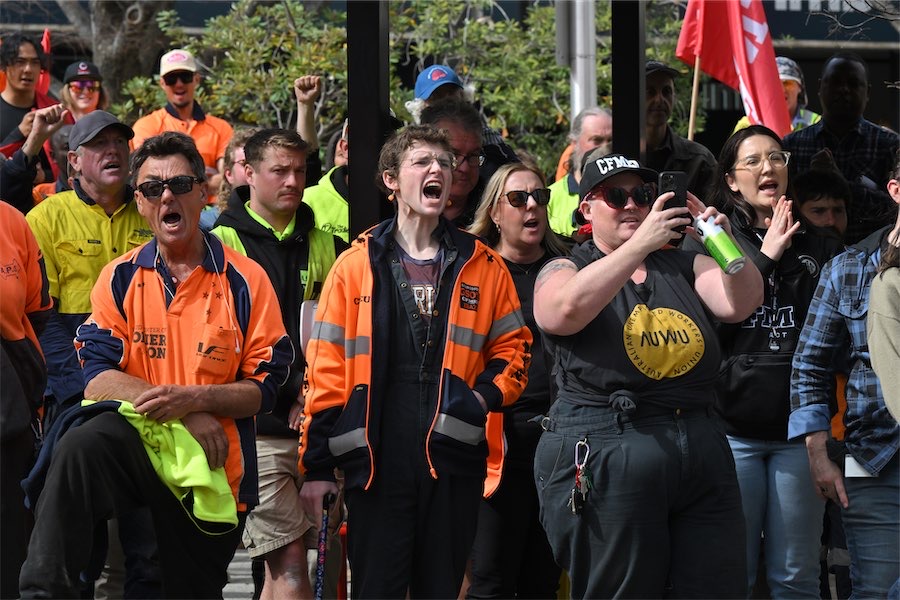
Union members… the bosses with the most members wield the most power. (AAP Image/Mick Tsikas)
“In Labor, the first point of call for any reshuffle are the factional power brokers. Unions are aligned around factions, but the blunt reality of political arithmetic means the more members you represent as a faction, the more power you have in the party,” writes political columnist ANDREW HUGHES.
Winter midterms always provide a good time for parties to do a reshuffle.
Dr Andrew Hughes.
The news cycle slows down, usually parliament is on break, and a new line-up has time to get used to areas before the heat of a budget or campaign. Timing really is everything.
While that’s the comms angle on a reshuffle, the political one is usually far different as we saw recently with the one ACT Labor undertook.
Labor would have been angry they were forced to do one probably a bit earlier than what they would have liked, around when a new leader comes in or late 2027 so a reshuffle presents a fresh brand for the election year ahead.
That all aside, the factors Labor use politically don’t change that much, and are broadly the same for most other parties, give or take. So let’s take a look at those factors.
The bosses
In Labor, the first point of call for any reshuffle are the factional power brokers. Usually these are the union bosses, ranked in order of influence by the number of members they represent.
Unions are aligned around factions, but the blunt reality of political arithmetic means the more members you represent as a faction, the more power you have in the party.
Why? Because unions still make up most delegates to party conferences, so therefore it is they who have the most power to decide administrative matters such as preselections and office bearers.
They are also the wisest of heads and the absolute truest of believers. Some have done little else in life, but nearly all I know or have met have never forgotten their background either.
That link between union boss and parliamentarian may get strained at times, but it is never forgotten – part of the preselection process is an expectation that a candidate is a union member, and not just recently either.
There have been recent times where leaders are elected first, but then must wait for the bosses to decide on a factional make up of cabinet, and, now and again, they will actually specify a person must be in or excluded from cabinet. Why?
Disloyalty to the faction costs. Loyalty rewards. Even if a good fight is put up despite the odds, that loyalty matters. But disloyalty… gone time.
As was said of Ed Husic at this year’s ALP National Conference, it’s freezer time. Sometimes one faction won’t really know why another has frozen someone out because sometimes it is purely factional internal dramas.
Leaders can make requests too, but the only one I’ve heard recently being given as much power as the bosses to pick and choose, is Anthony Albanese because of his 2025 result.
So how does this play out here in the ACT? Rough example. There are 37 ministries (yes, 37!) for eight people. Oh, Speaker counts as a ministry, if it’s up for grabs. But it’s not.
Let’s say the Left have four people, the Right three, and non-aligned 1. So that means a rough starting point is Left, 19 ministries, Right 16, and non-aligned 2.
Once numbers are agreed, then it’s an ideological carve up, the Left normally get education, health and social gigs, Right, well right gigs such as economics, finance, and development. So now with the foundations established, the leader gets to decide the fit based on people.
The people (balance, availability, talent)
People is about balance. For Labor that starts with gender and age balance. And, of course, it matters! You need to represent the people you represent. That means in cabinet, too.
Once that balance is done, then it’s down to availability. Some people can’t because of factional decisions or bad prior behaviour or some just don’t want to for reasons such as family or illness.
When that is worked out then it’s deciding who is the best fit for each role based on usual job criteria of experience, background and ambition. Finally, after that, is the last consideration.
Connections (stakeholder groups, the electorate, the opposition and cross bench)
This may be last, but for obvious reasons no less important than the other two. Ministers are front of brand. They are the connection point between us and government.
If key stakeholder groups can’t work with a minister, and sometimes it is down to personal reasons, then usually it’s the minister who changes.
In a minority government, having a minister who gets along somewhat with their opposite number is important for getting legislation through quickly, and not having it bogged down in committees, reviews and reports. So sometimes the best thing to do is to change minister and you can change the outcome.
The end result? Won’t be perfect, but hopefully an effective government. Over to you now to answer if that box has been ticked.
Dr Andrew Hughes lectures at the ANU Research School of Management, where he specialises in political marketing.
"Angrification makes it easier and quicker to find a political leader and social media platform where you can weaponise the broader anger on an issue," writes political columnist ANDREW HUGHES.
"Despite the potential benefits of developing a national plan there are major obstacles, primarily stemming from state and local governments seeing it as a threat to their autonomy," writes planning columnist MIKE QUIRK.
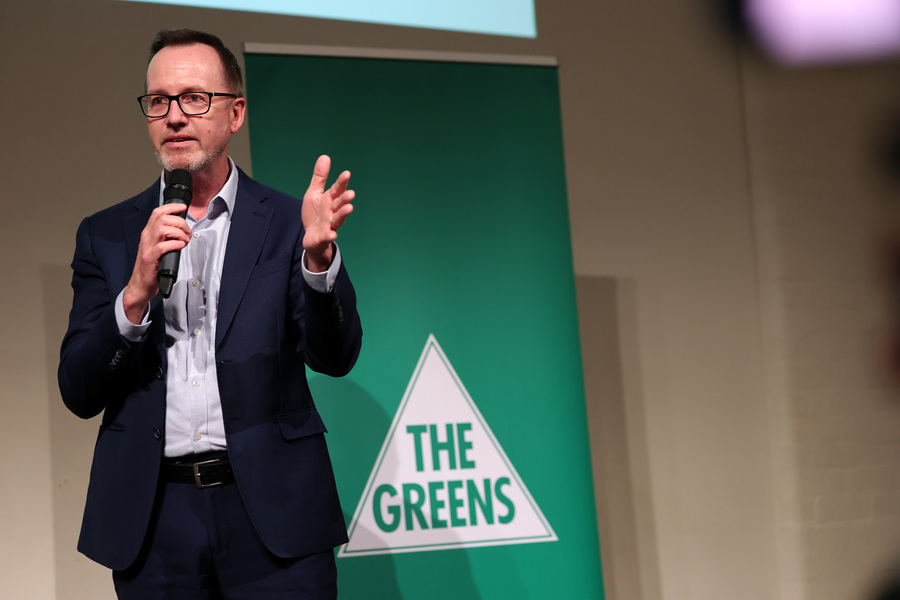
The Greens are embracing confrontation under David Shoebridge, but JOSH HOLLOWAY questions whether the party has drawn the right lessons from its 2025 election losses.




Leave a Reply